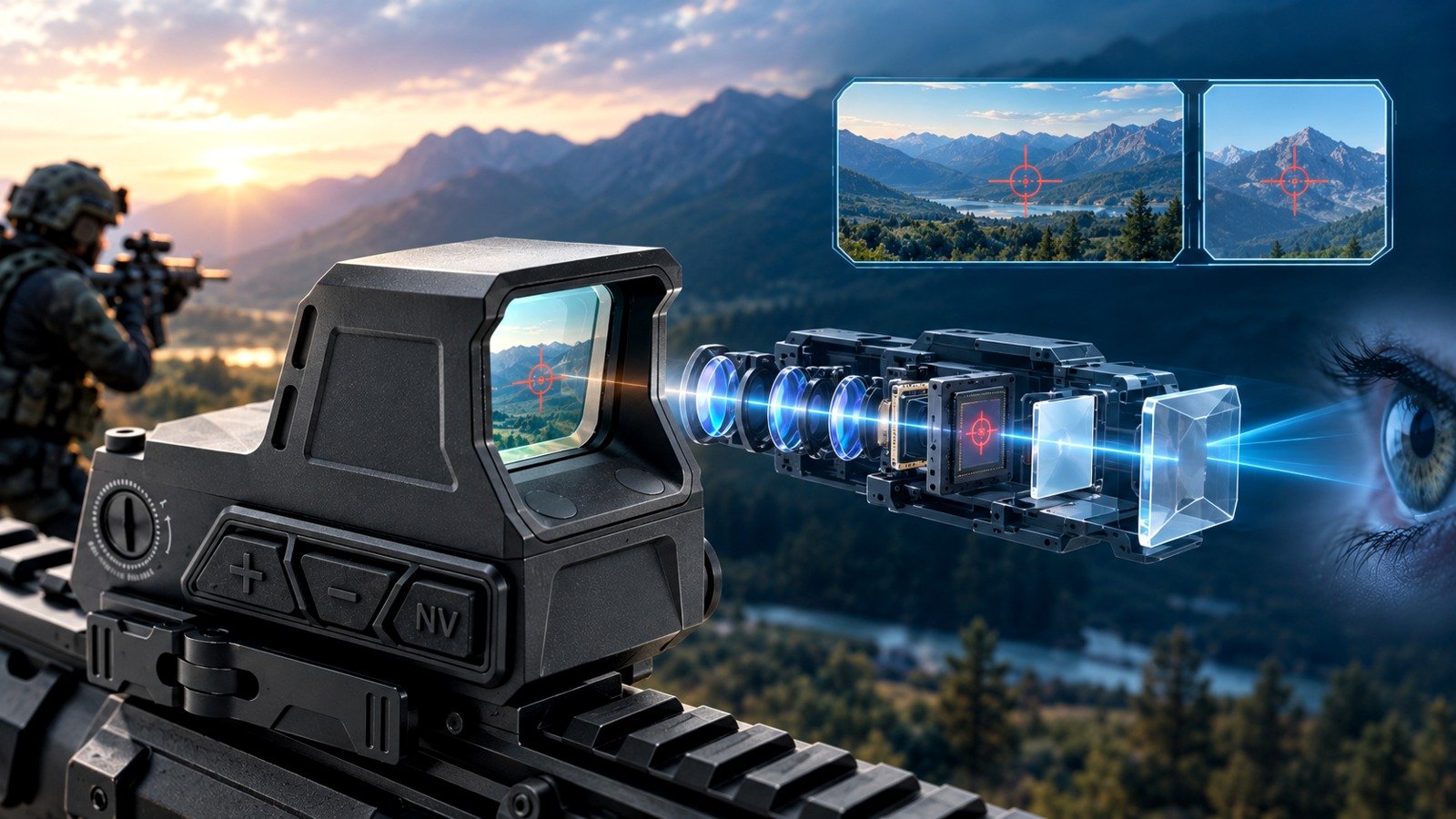
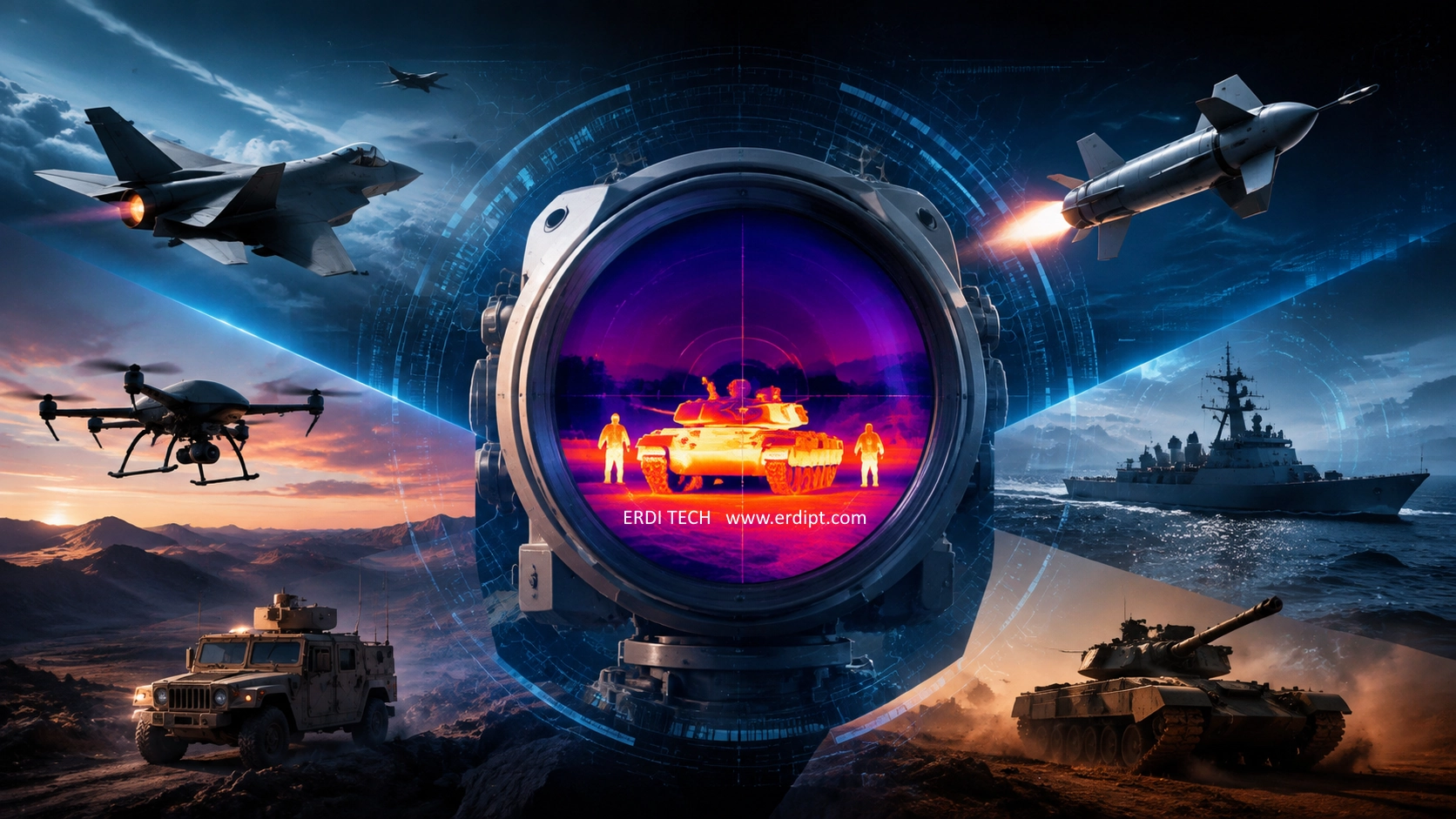
precision guidance technology has become a key technology for improving the effectiveness of weapon systems precision guidance technology has become a key technology for improving the effectiveness of weapon systems
Applications of Infrared Thermal Imaging Technology in Precision Guidance Systems

Applications of Infrared Thermal Imaging Technology in Precision Guidance Systems Introduction: From “Seeing the Target” to “Hitting the Target Precisely” In modern warfare and advanced equipment systems, precision guidance technology has become a key technology for improving the effectiveness of weapon systems. Compared with traditional weapons that rely on manual aiming or simple navigation methods, precision-guided systems can obtain real-time target information through advanced sensors and automatically adjust their flight paths, achieving highly accurate strikes against targets. Among various guidance technologies, infrared thermal imaging guidance has become one of the most important technical approaches in the field of precision…

Read more
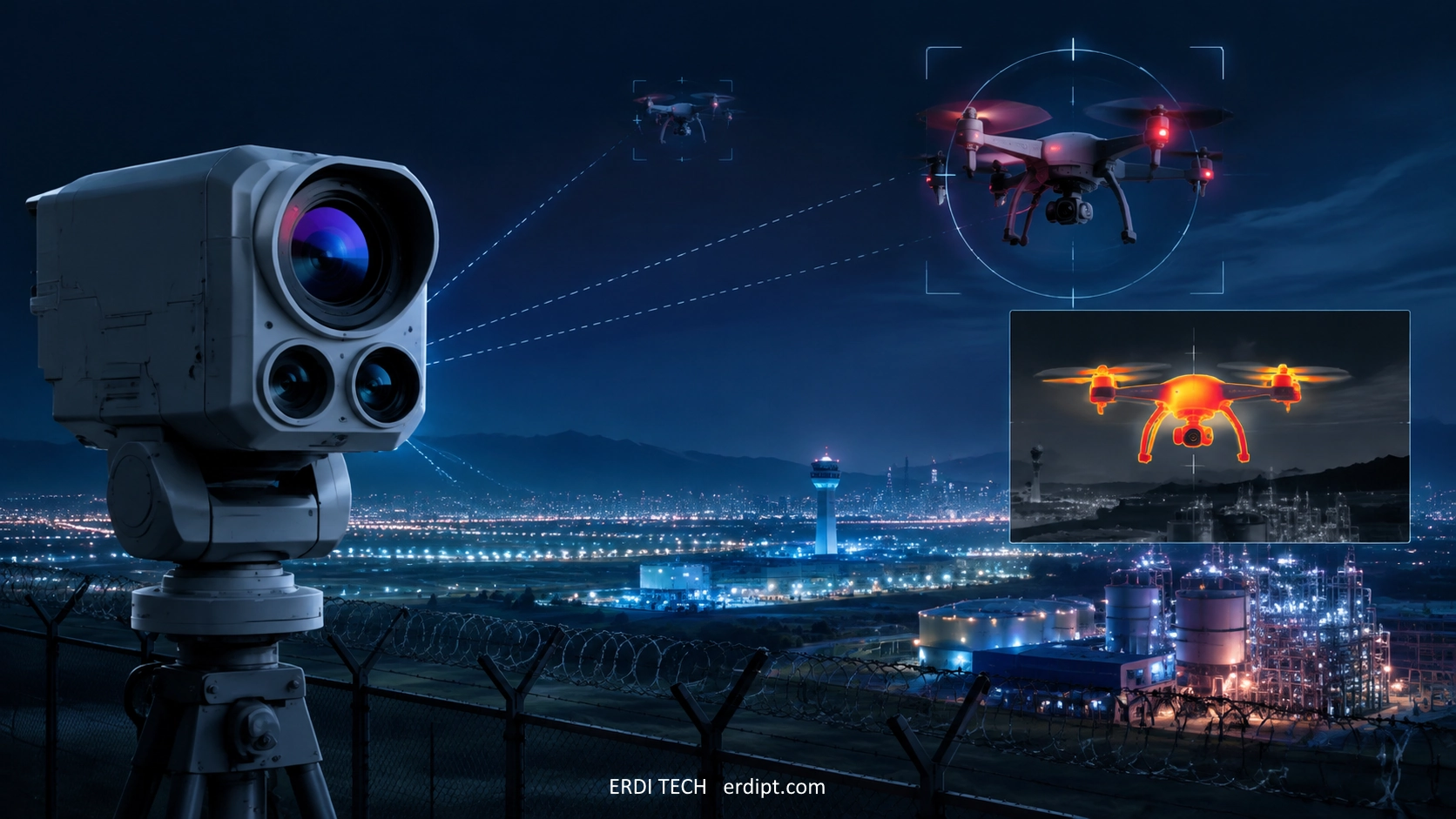
    New Security Challenges in the Era of Unmanned Aerial Vehicles New Security Challenges in the Era of Unmanned Aerial Vehicles
    Applications of Infrared Thermal Imaging Technology in Counter-UAS Systems

    Applications of Infrared Thermal Imaging Technology in Counter-UAS Systems Introduction: New Security Challenges in the Era of Unmanned Aerial Vehicles In recent years, unmanned aerial vehicle (UAV) technology has developed rapidly. With advantages such as compact size, low cost, flexible operation, and high mobility, small UAVs have been widely adopted in many civilian fields, including aerial photography, logistics, agriculture, infrastructure inspection, and surveying. However, as UAV technology becomes increasingly accessible, potential security risks associated with unauthorized drone activities have attracted growing attention. Unauthorized UAVs entering sensitive areas such as airports, military bases, power facilities, and government sites may create…

    Read more

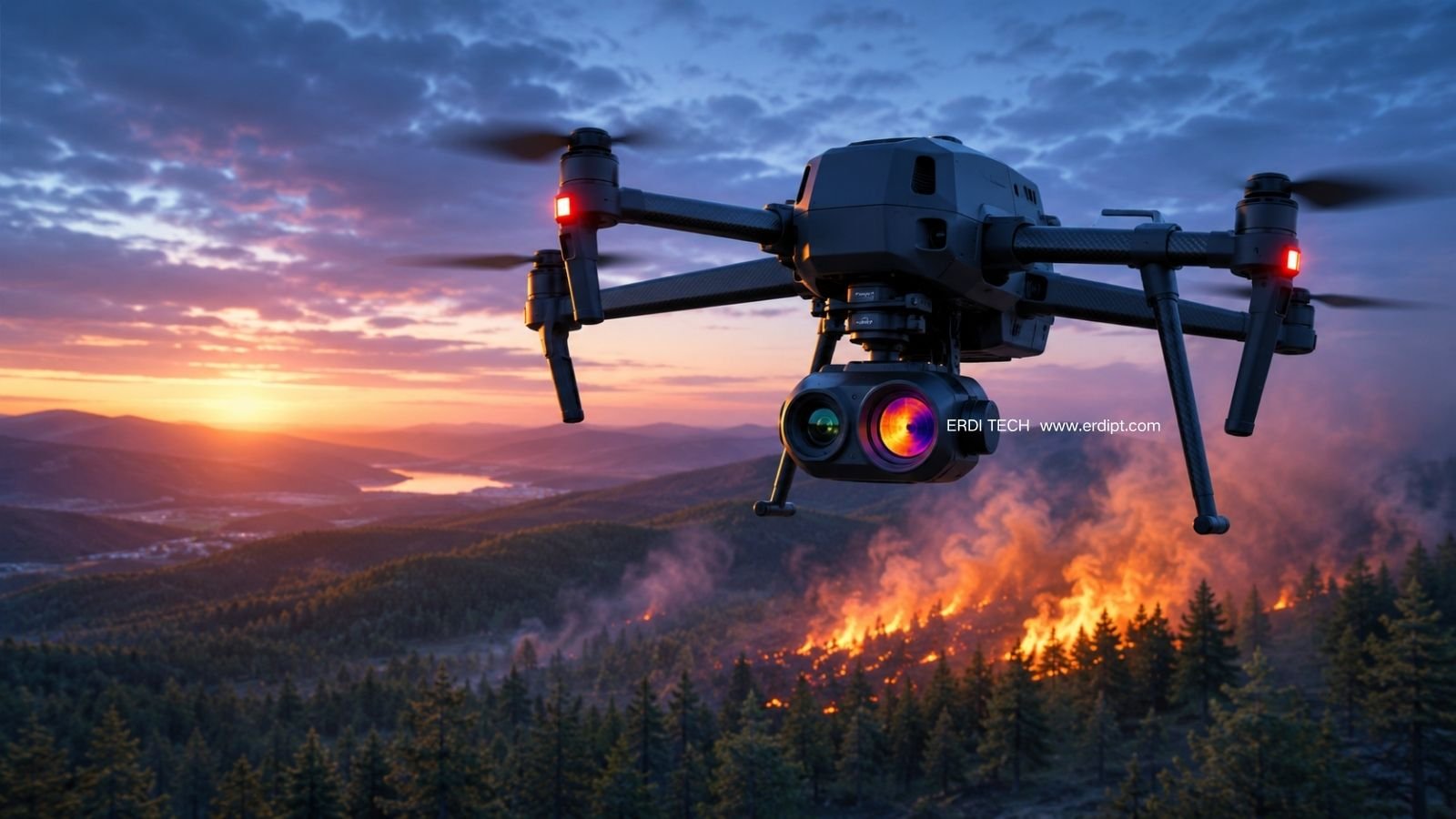
      thermal imaging module based on your application thermal imaging module based on your application
      How to Choose the Right Thermal Imaging Module for a Drone: A Complete Buyer’s Guide (2026)

      How to Choose the Right Thermal Imaging Module for a Drone: A Complete Buyer’s Guide (2026) As drones continue to transform industries ranging from infrastructure inspection to public safety, thermal imaging has become one of the most valuable sensing technologies available. Whether the mission involves locating missing persons at night, detecting overheating electrical equipment, monitoring wildfires, or enhancing border security, a thermal imaging module allows a drone to “see” heat rather than visible light. Yet selecting the right thermal camera for a UAV is not as simple as choosing the highest resolution or the lowest price. Every application has…

      Read more
        Why the Industry Is Moving from 17 μm to 12 μm Pixels Why the Industry Is Moving from 17 μm to 12 μm Pixels
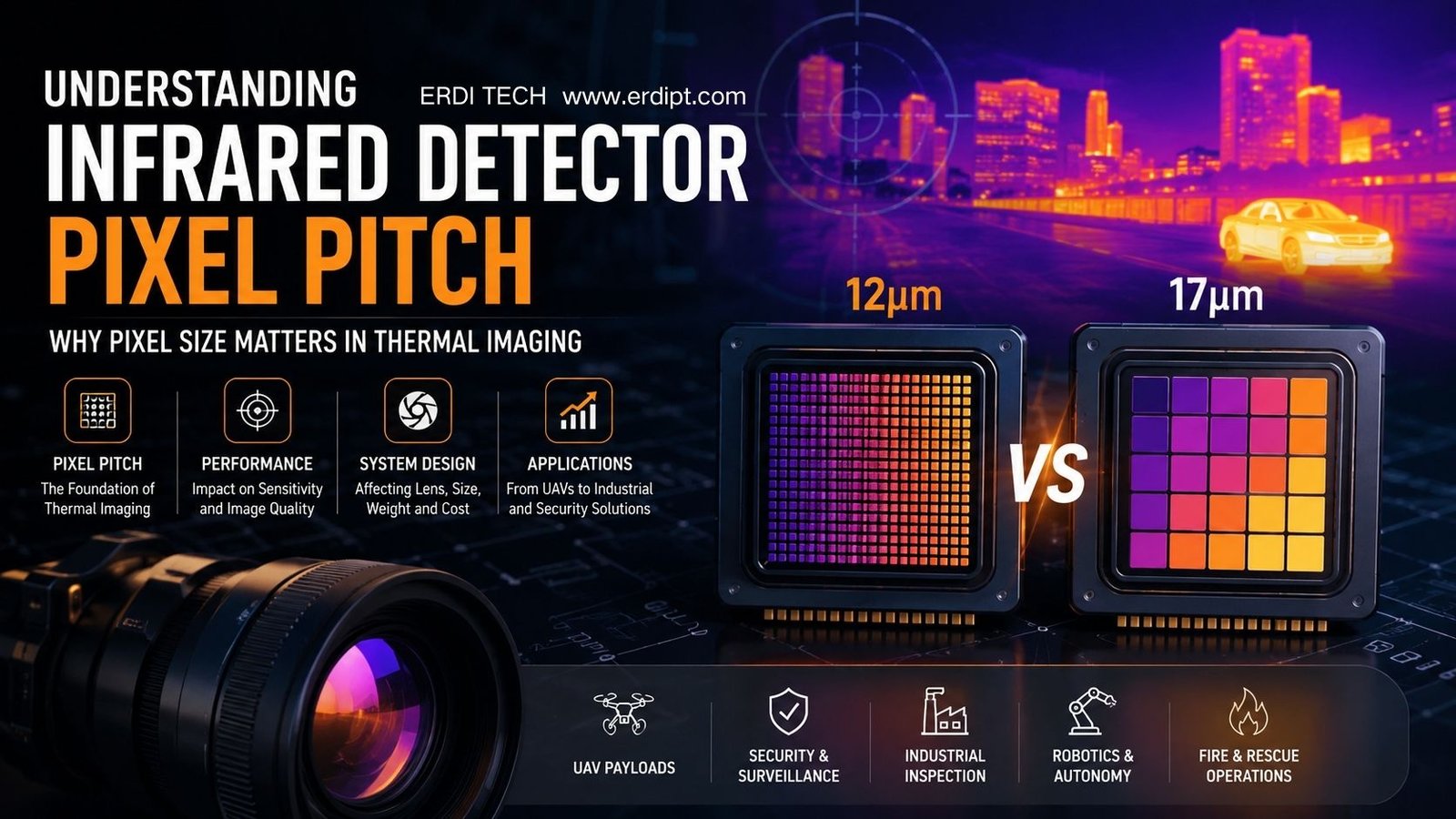
        Understanding Infrared Detector Pixel Pitch: Why Pixel Size Matters in Thermal Imaging | ERDI

        Understanding Infrared Detector Pixel Pitch: Why Pixel Size Matters in Thermal Imaging Quick answer: pixel pitch is a design trade-off, not a simple “smaller is better” spec. Smaller pixels (e.g. 12 μm) enable more compact, lighter, lower-cost modules, while larger pixels can offer better sensitivity and longer detection range; the right choice depends on your application and optical system. If you’ve ever compared thermal imaging cameras or infrared modules, you’ve probably come across specifications such as 12μm, 15μm, or 17μm Pixel Pitch. For many newcomers, these numbers can be confusing. Does a smaller pixel automatically produce a better image?…

        Read more
          Infrared Thermal Imaging in the Automotive Industry: Applications, Benefits, and Future Trends Infrared Thermal Imaging in the Automotive Industry: Applications, Benefits, and Future Trends
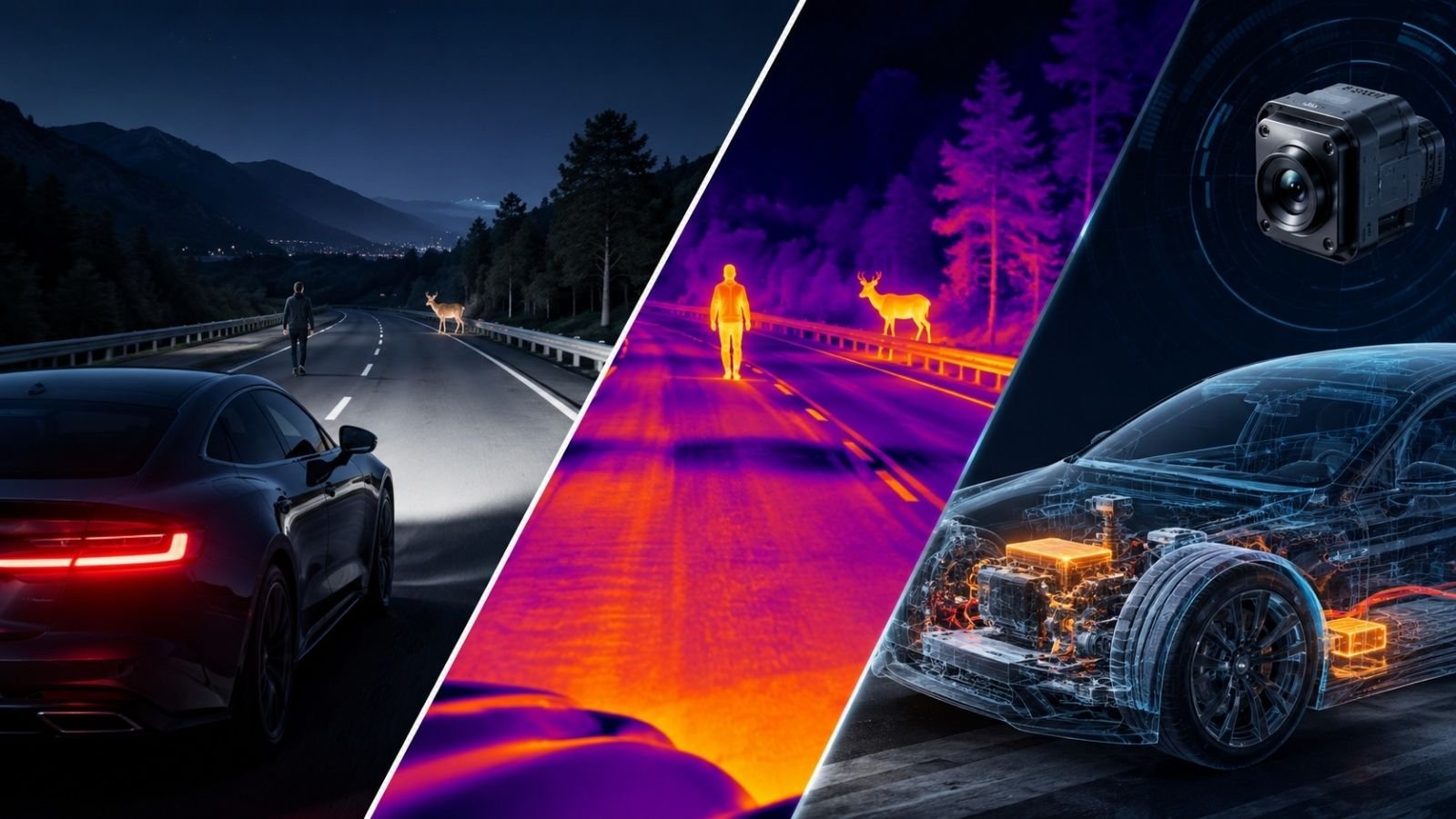
          Infrared Thermal Imaging in the Automotive Industry: Applications, Benefits, and Future Trends

          Infrared Thermal Imaging in the Automotive Industry: Applications, Benefits, and Future Trends Introduction As vehicles become smarter and more connected, automotive manufacturers are constantly searching for technologies that improve driving safety, reliability, and intelligent perception. One technology that has gained significant attention in recent years is infrared thermal imaging. Originally developed for military, aerospace, and industrial inspection, automotive infrared thermal imaging systems are now becoming an essential part of advanced driver assistance systems (ADAS), autonomous driving platforms, electric vehicle diagnostics, and vehicle manufacturing. Unlike traditional cameras that rely on visible light, thermal imaging cameras detect infrared radiation emitted by…

          Read more
            Infrared thermal imaging technology has become one of the most important sensing technologies in modern military operations. Infrared thermal imaging technology has become one of the most important sensing technologies in modern military operations.
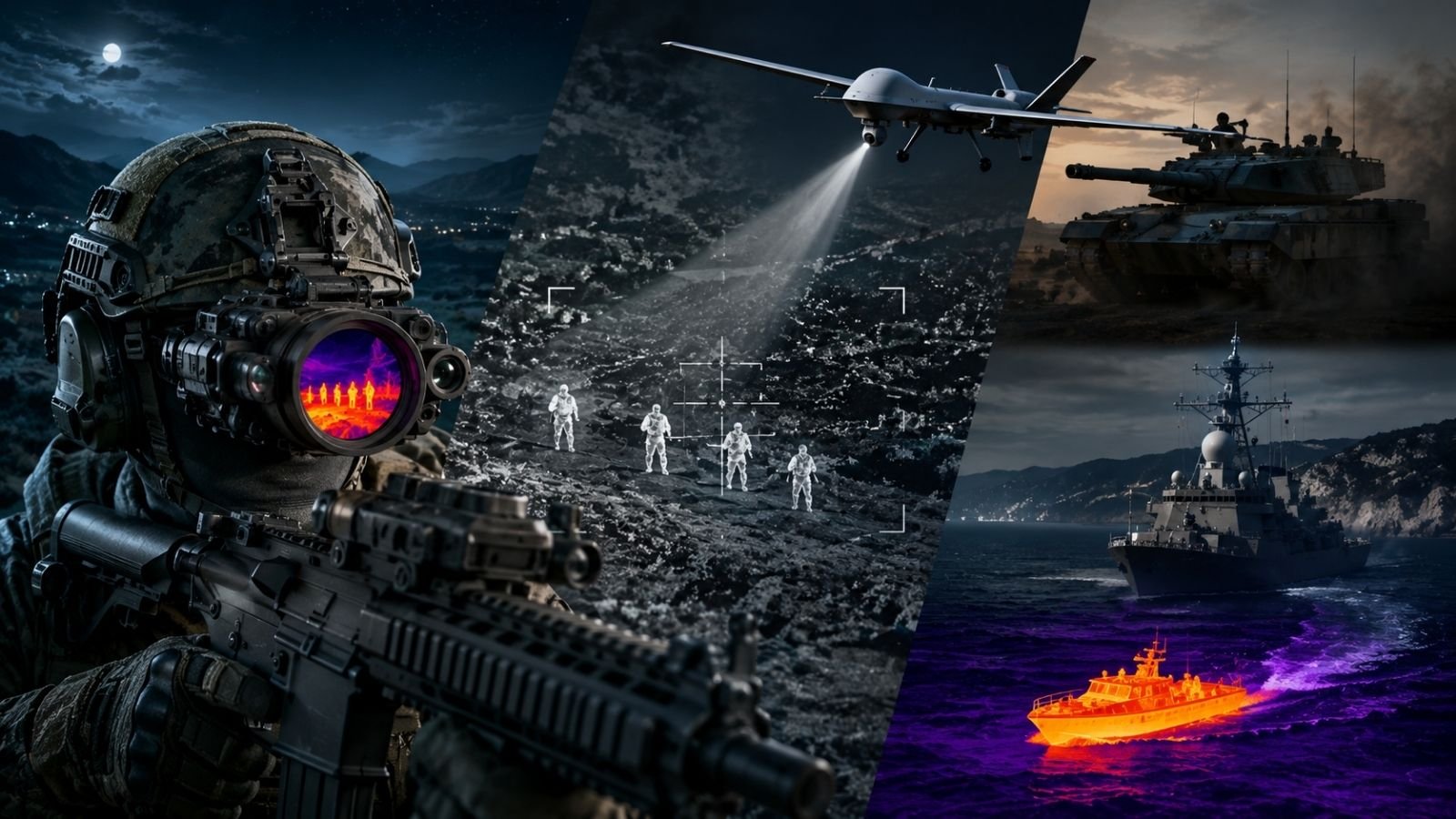
            Infrared Thermal Imaging Technology in Military Applications: Benefits, Uses, and Future Trends

            Infrared Thermal Imaging Technology in Military Applications: Benefits, Uses, and Future Trends Introduction Infrared thermal imaging technology has become one of the most important sensing technologies in modern military operations. Unlike conventional optical cameras, thermal imaging systems detect infrared radiation emitted by objects rather than relying on visible light. This allows military personnel to identify targets in complete darkness, through smoke, and in challenging weather conditions. Today, thermal imaging technology is widely used in: Military surveillance Border security UAV reconnaissance Armored vehicles Fighter aircraft Naval systems Missile guidance Soldier equipment As infrared detector technology continues to improve, thermal imaging…

            Read more
              What is the difference between cooled and uncooled thermal imaging systems What is the difference between cooled and uncooled thermal imaging systems
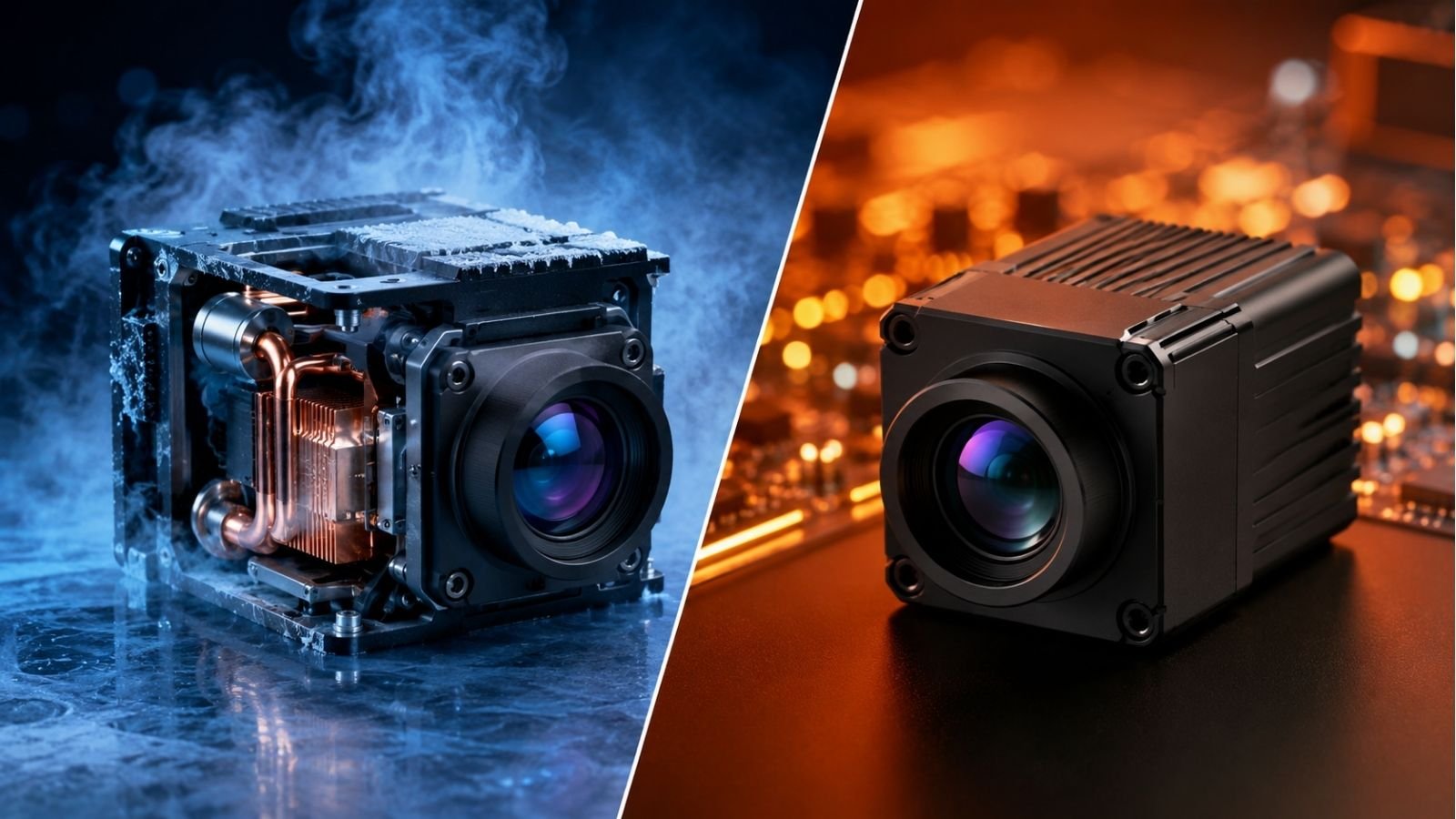
              Cooled vs Uncooled Thermal Imaging: Key Differences, Advantages, Applications, and How to Choose

              Cooled vs Uncooled Thermal Imaging: Key Differences, Advantages, Applications, and How to Choose Introduction Quick answer: choose uncooled thermal imaging for most commercial, industrial, and UAV applications — it is compact, affordable, and starts instantly. Choose a cooled system only when you need maximum sensitivity and long-range detection, typically in defense and scientific applications. Thermal imaging technology has become an essential tool in military surveillance, border security, industrial inspection, UAV payloads, firefighting, search and rescue operations, and commercial monitoring systems. When researching thermal cameras, one question appears repeatedly: What is the difference between cooled and uncooled thermal imaging systems?…

              Read more
                Laser Rangefinder Module Purchasing Guide

                Laser Rangefinder Module Purchasing Guide How to Choose the Right Laser Distance Measurement Module for Your Project Quick answer: start by defining your application scenario, then match measurement range, accuracy, interface, and environmental requirements — the highest-spec module is rarely the best fit for your project. As industries such as robotics, drones, smart manufacturing, autonomous systems, and intelligent devices continue to grow, laser ranging technology is becoming increasingly important in modern electronic products. At the center of many of these systems is a critical component known as the laser rangefinder module. Today, laser distance measurement modules are widely used…

                Read more
                  Illustration of laser ranging technology applications in the drone fieldIllustration of laser ranging technology applications in the drone field Illustration of laser ranging technology applications in the drone fieldIllustration of laser ranging technology applications in the drone field
                  Applications of Laser Ranging Technology in the Drone Industry

                  Applications of Laser Ranging Technology in the Drone Industry How Laser Distance Measurement Is Making Modern Drones Smarter and Safer Quick answer: laser ranging gives drones accurate real-time spatial awareness — obstacle detection, altitude measurement, navigation, and 3D mapping — which is why it is becoming a core technology for safer, more intelligent drones. In recent years, drone technology has developed at an astonishing pace. What once started as a tool mainly for aerial photography has now expanded into industries such as agriculture, logistics, mapping, infrastructure inspection, emergency rescue, environmental monitoring, and intelligent transportation. Behind this rapid evolution, one…

                  Read more