


Advantages of Waveguide Technology in Weapon Sights
Weapon sights are changing fast. Traditional mechanical sights, red dot sights and conventional optical scopes are gradually giving way to digital, intelligent and multifunctional sighting systems — driven by advances in optoelectronics, microdisplay technology and infrared thermal imaging.
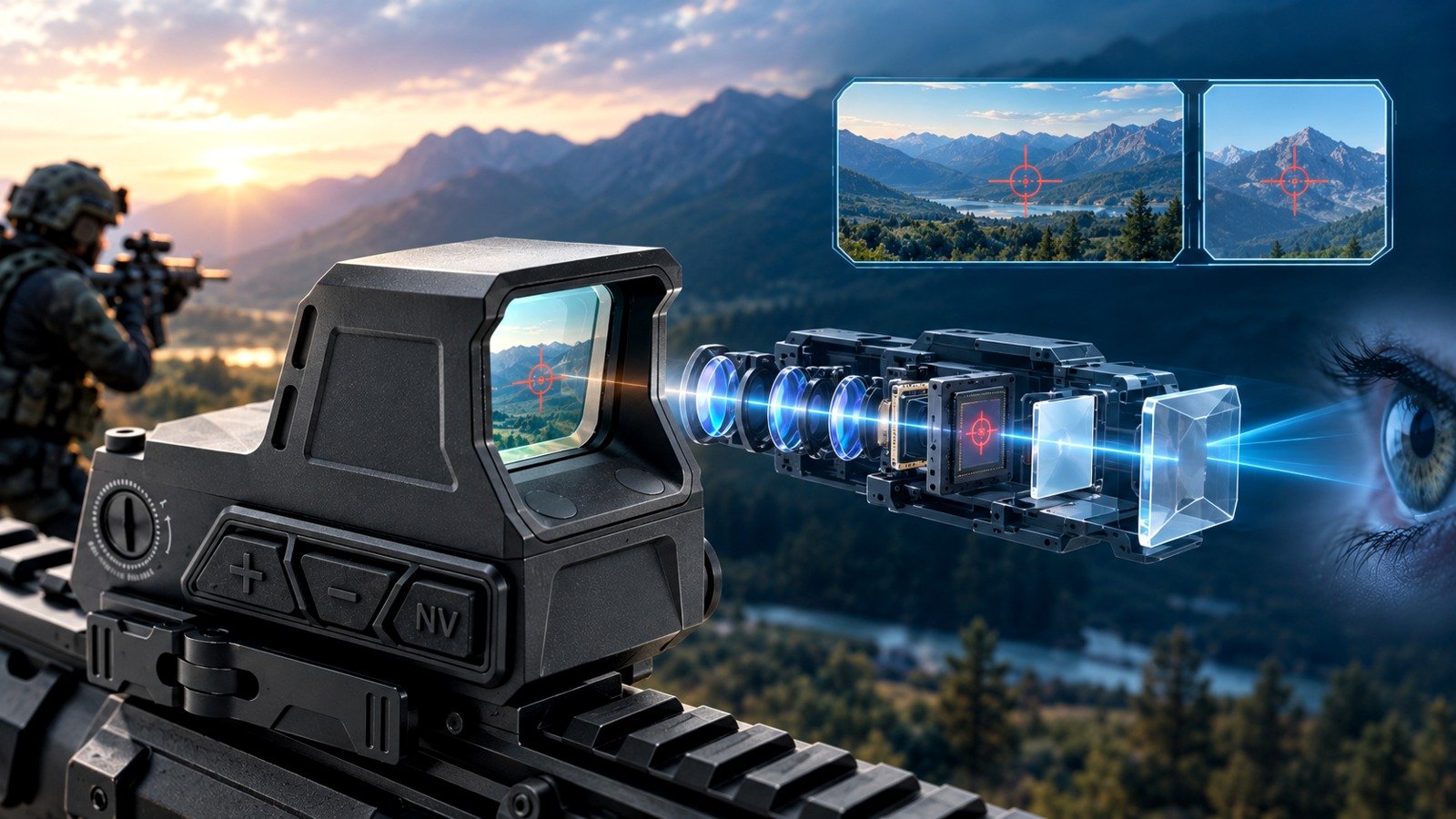
One technology sits at the centre of that shift: optical waveguide technology. In a waveguide sight, part of the optical path is folded into a thin transparent optical element instead of being stretched across a long chain of lenses and prisms. That single architectural change has a direct effect on size, weight, viewing window, information overlay — and on how easily a thermal imaging module can be integrated into the finished product.
This article explains what waveguide technology is, why it matters for weapon sights, and what it means for the infrared thermal imaging module suppliers who have to design around it.
1. What Is Waveguide Technology?
The word “waveguide” is often associated with optical fibre or the RF waveguides used in communications. In a sighting system it means something closely related: a transparent optical medium that guides light, combined with coupling structures that deliver an image to the user’s eye.
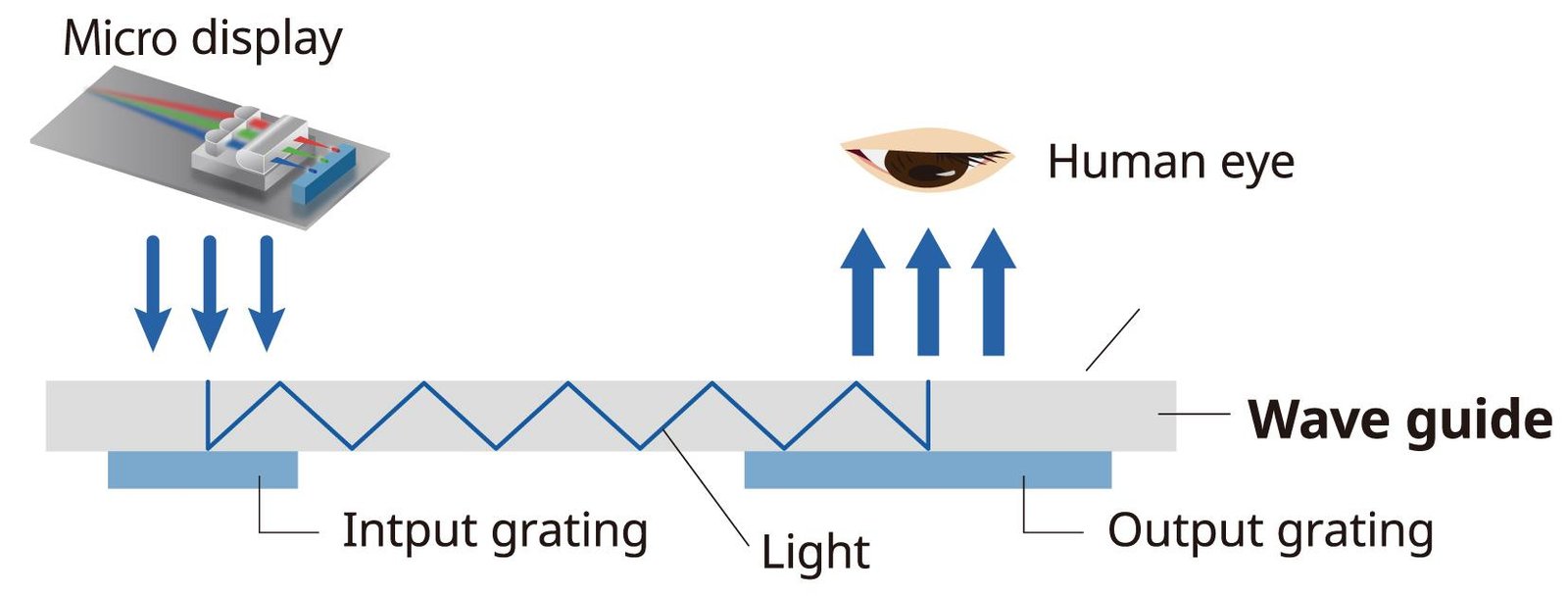
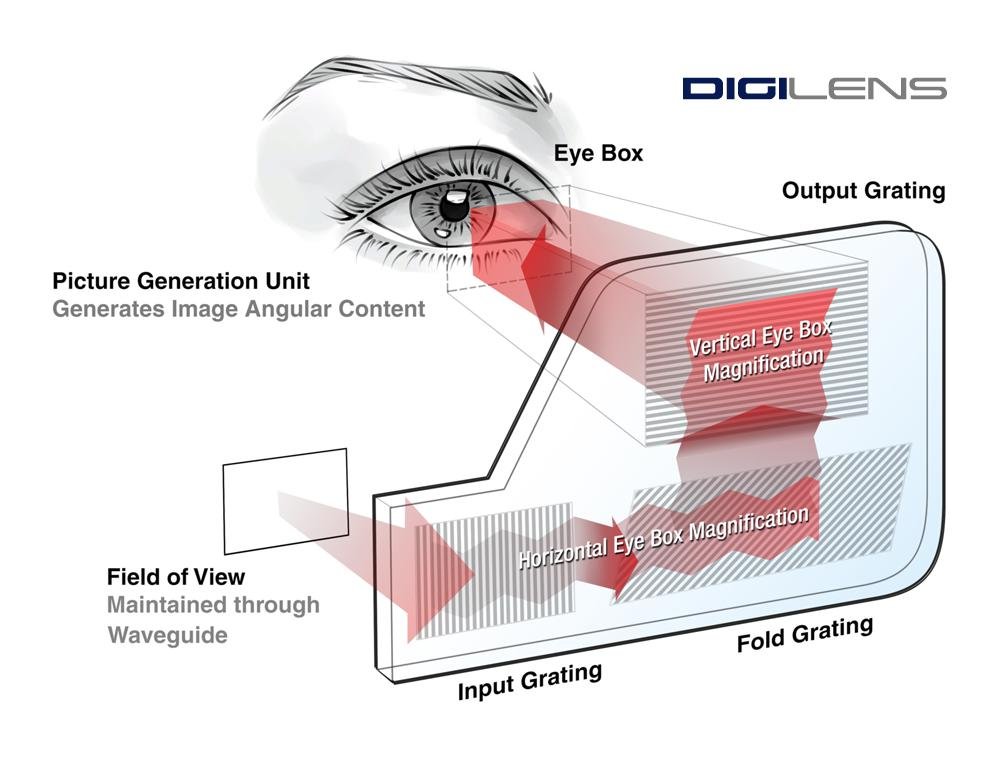
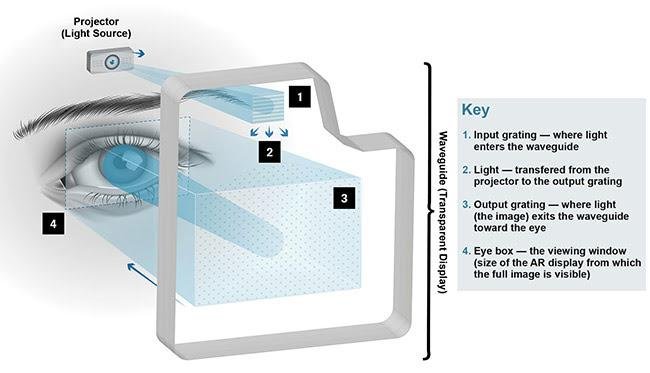
The underlying principle is simple. Light does not have to travel through air in a straight line — it can also be guided inside a specially designed optical medium. In a typical planar optical waveguide, light entering from one side propagates through the transparent material by total internal reflection (TIR). Add gratings, microstructures or reflective coupling elements at specific locations, and light can be injected into the waveguide at one point and extracted at another.
A waveguide display system therefore reduces to a short, clean chain:
Image source → Input coupler → Propagation inside waveguide → Output coupler → Human eye
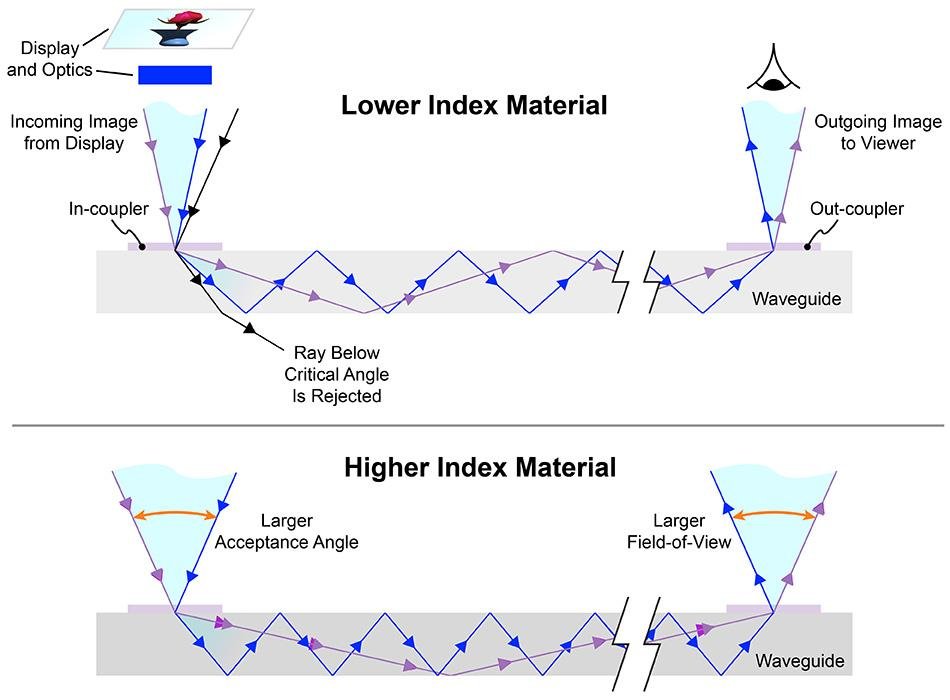
Traditional sights rely on a combination of lenses, mirrors or prisms to bend light. Waveguide technology takes a different route: it hides part of the optical path inside a comparatively thin transparent element. That is not merely a cosmetic change of architecture — it reshapes what is possible in size, field of view, overlay capability and thermal integration.
The approach is already mature in near-eye and augmented-reality displays. In weapon sights, publicly disclosed designs have explored using waveguide displays to present video, thermal imagery and symbolic information together with a direct view of the scene. Military research programmes have likewise investigated combining microdisplays with optical combiners for weapon sights and night-vision equipment.
2. Why Traditional Weapon Sights Need Complex Optics
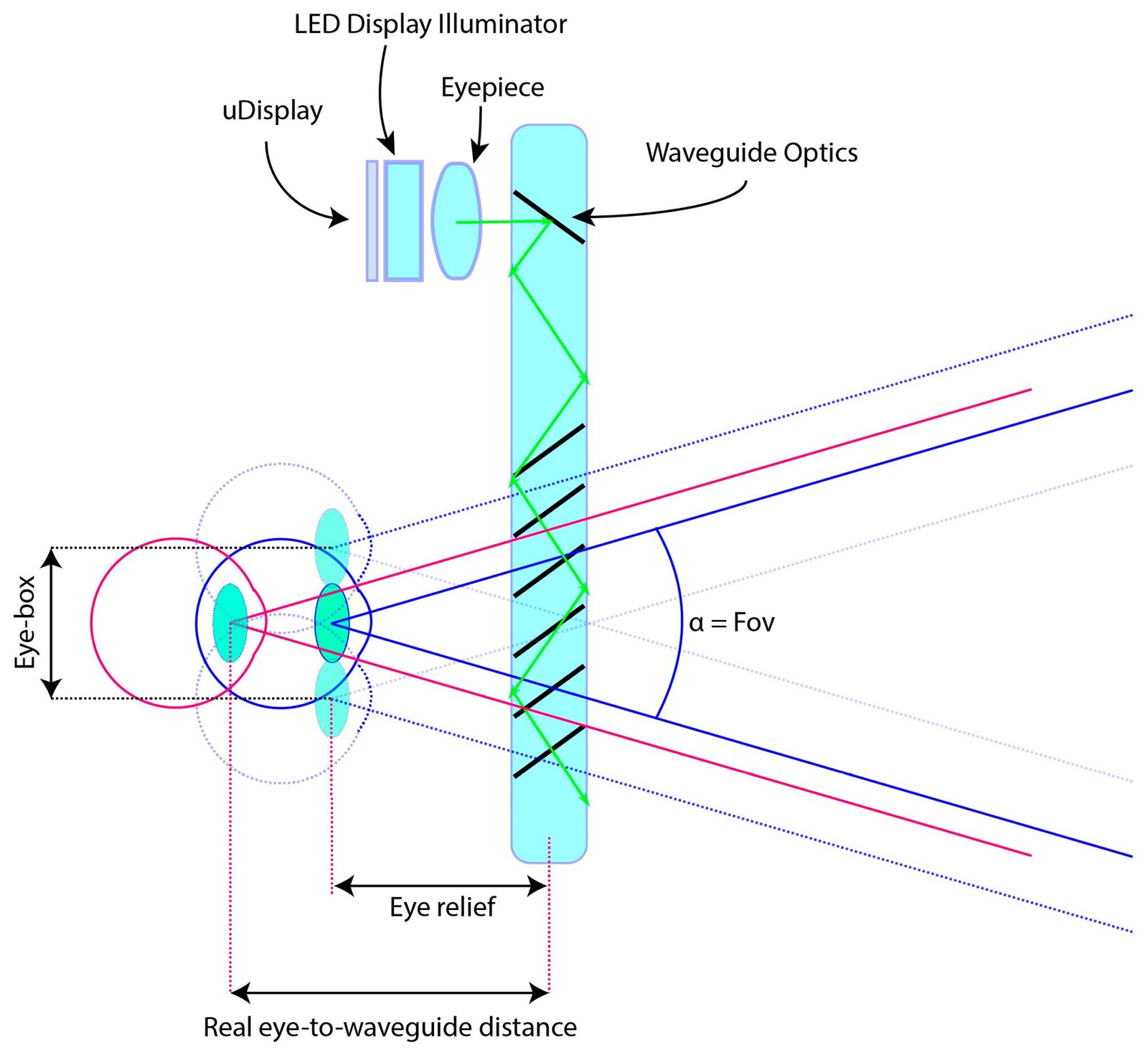
To appreciate what a waveguide changes, it helps to look at the standard architecture of a digital weapon sight. A typical unit contains a front optical system, an image sensor, image-processing electronics, a microdisplay, magnification and collimation optics, an eyepiece system, and the housing with its mechanical adjustment. Add thermal imaging and you also need an infrared lens, an infrared detector and its own processing chain.
That means there are effectively two complete optical paths between the target and the operator’s eye:
Target → Optical system → Image sensor → Digital image → Microdisplay → Eyepiece → Human eye
Producing a clear, comfortable virtual image from a microdisplay requires a certain optical path length. This is precisely why digital sights can remain bulky even when the electronics inside them have shrunk to almost nothing: the electronics are small, but the optics still demand room.
Waveguide technology attacks that constraint from a different direction. Instead of adding more lenses, it changes the way the image travels.
3. How Waveguide Technology Reshapes the Optical Path
A useful analogy: a traditional optical system is a road. If the road is long, it needs land. A waveguide folds that road.
Once light enters the waveguide it propagates by total internal reflection, and dedicated coupling structures extract it at a chosen location. Externally, the element may look like a simple transparent window; internally it performs a substantial optical transmission function. That freedom lets designers rethink the internal layout of the whole sight rather than arranging components around the requirements of an eyepiece.
For compact and lightweight digital optoelectronic devices, that flexibility is valuable in itself.
4. Key Advantages of Waveguide Technology in Weapon Sights
4.1 A More Compact Optical Structure
This is the easiest advantage to grasp. Conventional display optics need physical space for collimation, magnification and imaging. A waveguide lets light propagate inside a transparent element, giving designers far more freedom in arranging the internals.
Note the precise claim: a waveguide does not eliminate all lenses. It redistributes the optical path. When properly designed, that can reduce the space consumed by certain conventional optical structures — a significant benefit for a weapon sight, where size and weight are constant constraints. It matters even more when a single product has to house an image sensor, microdisplay, processing board, battery, communication module, control buttons and a thermal imaging module. In such a system, internal volume becomes a first-order engineering problem.
4.2 A Larger, More Natural Viewing Window
A weapon sight must do two things at once: display aiming information, and let the operator observe the surrounding scene quickly and naturally. The design of the viewing window is therefore critical.
Because a waveguide couples display information into a transparent element, digital information and the observed scene can be combined visually. That is fundamentally different from peering at a small display through an eyepiece. It opens the door to:
- Digital aiming information
- Status readouts
- Graphical symbols and navigation cues
- Video image display
- Thermal imaging display
- Visible-light and infrared image fusion
This is also what ties waveguide technology to the next generation of intelligent optoelectronic sights, and to our own WGHS01 optical waveguide sight, which applies the same 1× both-eyes-open principle to a fielded weapon sight.
4.3 Better Support for Digital Information Overlay
Traditional optical sights exist to help the user see the target clearly. Modern digital sights are evolving from pure observation devices into information-display systems that combine data from multiple sensors into one visual output.
In disclosed weapon-sight waveguide designs, the waveguide can accept images from different sources and combine them before presenting them to the observer — including video or thermal imagery blended with the direct scene. The implication is that a future sight is no longer simply:
Lens + reticle
but rather:
Sensors + image processing + display system + waveguide + multi-source information fusion
5. Waveguide Technology and Infrared Thermal Imaging
This is where the subject becomes directly relevant to the infrared industry.
A conventional thermal sight is a self-contained digital imaging chain: infrared lens → infrared detector → image processing → microdisplay → eyepiece. The detector converts infrared radiation into digital data, processing generates the thermal image, the microdisplay presents it, and the eye reads it through the eyepiece.
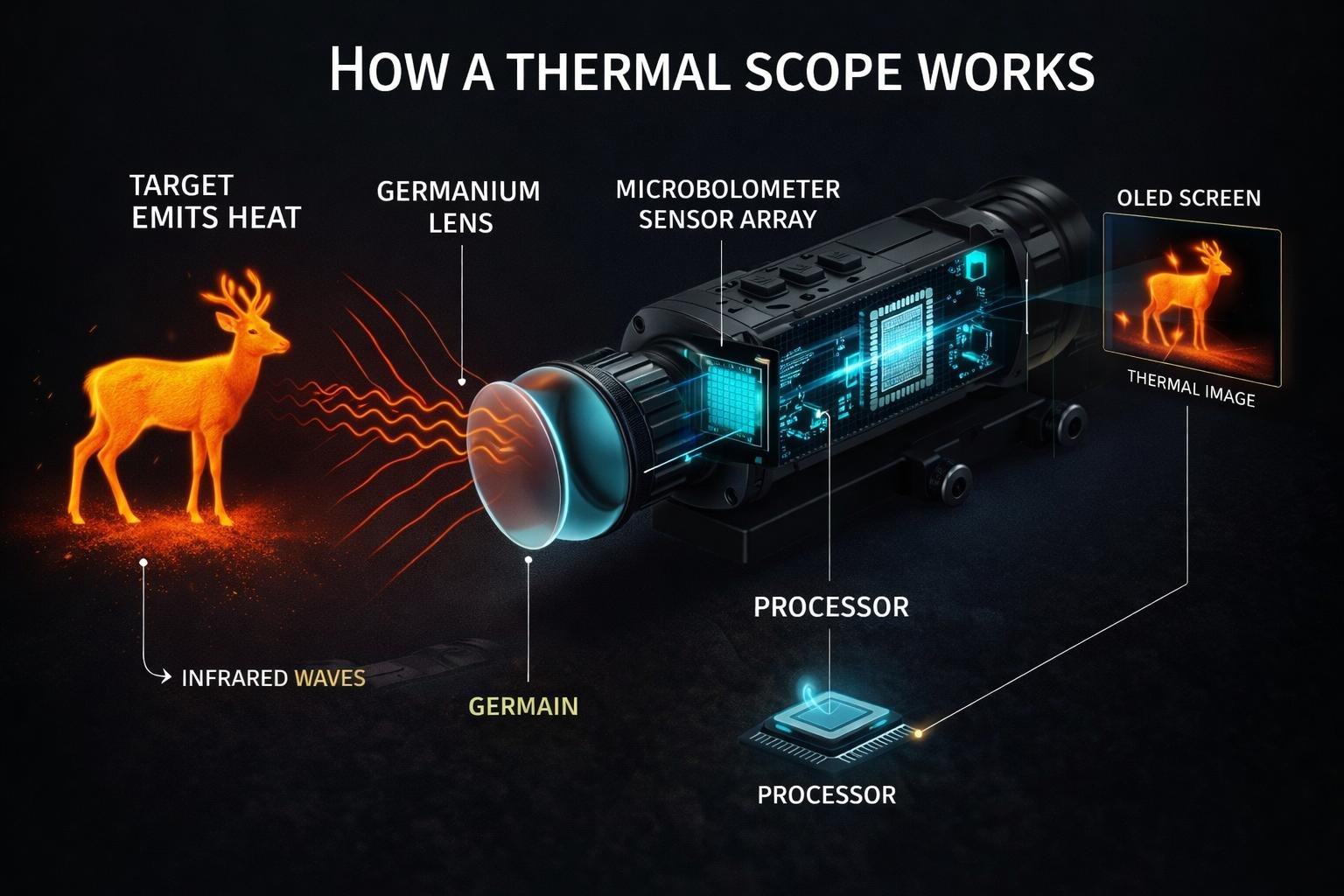
With a waveguide display architecture, that thermal image can instead be projected into the waveguide and delivered to the eye:
Infrared scene → Infrared lens → Infrared detector → Image processing → Microdisplay / projection → Waveguide → Human eye
More advanced designs go further, combining a direct visible scene, the thermal image and digital markers inside the same viewing window. Disclosed technical solutions have already demonstrated the concept: an infrared sensor produces a thermal video signal, and a projection system couples that image into a transparent waveguide display so the observer sees the real scene and the thermal picture simultaneously.
For an infrared module supplier, this reframes the technology. A waveguide is not merely a matter of the external housing of a weapon sight — it can become the optical interface between the thermal module and the final display system. Thermal modules such as the ERUTM64-19 uncooled thermal imaging module are specified not only for resolution and NETD but increasingly for how cleanly their output can be handed to that display chain.
6. Multi-Image Fusion Through a Single Waveguide
Future intelligent sights will process several information sources at once: visible-light imagery, infrared thermal imagery, aiming data, system status and readings from other sensors.
Under a conventional architecture, giving each source its own display channel would make the system progressively more complicated. A key property of waveguide displays is that they can accept multiple image sources through different input locations or coupling regions. Disclosed weapon-sight designs have explored coupling different images into one waveguide at several inputs and combining them at the output — in effect, optical information fusion.
In other words, a waveguide need not display a single image. It can act as a shared display platform for multiple sources, which is exactly what multi-sensor optoelectronic systems require.
Our own RDTIFS256 red-dot thermal fusion sight is a production example of this principle in a compact sight: a red-dot reticle and an uncooled thermal image share a single 1× window.
7. Greater Design Freedom for OEM Manufacturers
For OEM manufacturers, the most attractive aspect of waveguide technology is often not a single specification but the different system architecture it offers.
Traditional products must be designed around lenses and eyepieces. A waveguide system lets designers start from the display window and work backwards. The microdisplay can sit in a relatively concealed position inside the device while the coupling structure transfers the image into the waveguide. Electronics, display and viewing window no longer have to follow a conventional layout — real freedom for industrial design, and increasingly valuable as optoelectronic devices become more compact and modular.
8. Waveguide Technology Is Not a Universal Solution
None of the above means waveguides simply replace conventional optics. A waveguide system is a demanding piece of optical engineering, and it has to resolve a long list of competing requirements:
- Optical coupling efficiency
- Optical uniformity
- Field of view
- Exit pupil design and eye-box size
- Image clarity
- Colour consistency and brightness uniformity
- Ambient-light interference
- Temperature variation
- Mechanical shock
- Optical manufacturing accuracy
For a sight that must operate in harsh environmental conditions, the optical and mechanical structures have to be tightly coordinated. Whether the theoretical advantages translate into real product advantages depends on overall engineering: waveguide, display, image source, optics, electronics and mechanics together.
So the accurate statement is not “waveguide = smaller, clearer, more advanced.” It is: a waveguide provides a new optical architecture; the finished performance depends on the complete design.
9. How Waveguide Sights Differ from Red Dot and Holographic Sights
From the user’s side, different optical technologies can feel similar — you see an aiming mark inside a window. The underlying principles, however, are quite different.
- Reflex (red dot) sights use a light source to generate an aiming mark and an optical surface to reflect that mark toward the observer’s eye.
- Holographic sights use a different optical principle to record and reconstruct the aiming information.
- Waveguide sights couple image light into a waveguide, propagate it internally, and extract it through a designated region.
A waveguide is therefore not simply a replacement for the glass in a red dot sight. Its real significance is that it redefines the path an image takes from its source to the human eye. Dedicated sighting products built on optical waveguide architectures — such as the WGHS01 — show that the technology has already moved beyond AR and near-eye displays into fielded optoelectronic sights. For comparison of the holographic route, see our H2S holographic sight.
10. What It Means for Infrared Thermal Imaging Module Suppliers
This trend deserves close attention from anyone supplying thermal modules.
Historically the core value of a thermal module sat in four things: detector, lens, image processing and output interface. As end products become intelligent, customer requirements shift from “give me a thermal image” towards “give me a thermal image that integrates cleanly with my display and control system.”
A complete digital sight may therefore look like this:
Infrared thermal imaging module → Image processing system → Microdisplay → Waveguide optical system → Final viewing window
When talking to weapon-sight OEM customers, module suppliers increasingly need to understand not only resolution, pixel pitch, NETD, frame rate and focal length, but also the customer’s display technology, microdisplay specification, image input and output interfaces, power budget, space constraints, waveguide display architecture, and visible/infrared fusion requirements. That understanding is what allows a supplier to fit the customer’s final product architecture instead of only its specification sheet.
For background on the interface decisions involved, see our guide to integrating an infrared thermal imaging module into your system.
11. Towards the Optoelectronic Information Terminal
Weapon sight development can be summarised in three stages. Early products focused on accurate aiming. Digital products moved the emphasis to seeing clearly. Today’s intelligent optoelectronic products focus on a third question: how to present more valuable information to the user.
As that happens, display technology becomes progressively more important. The significance of waveguide technology is that it can act as the bridge across the whole chain — sensor → digital image → display system → human eye — and as infrared thermal imaging, visible imaging and digital fusion continue to develop, waveguide displays look set to become an important technology route for highly integrated optoelectronic sights.
12. Where Waveguide Weapon Sights Are Heading
Four convergences are worth watching.
First, infrared thermal imaging. Thermal modules reveal information that visible-light observation cannot, and waveguides offer a more integrated way to present those digital images. If you are selecting a core for that purpose, our guide to cooled vs uncooled thermal imaging covers the trade-offs.
Second, visible and infrared image fusion. Rather than switching between modes, future systems will combine the two according to the task.
Third, augmented-reality-style information display. Waveguides are inherently suited to transparent displays and overlays, making them a natural interface between digital information and the real scene.
Fourth, deeper optoelectronic integration. As microdisplays, detectors, processing chips and optics continue to shrink, weapon sights will evolve into highly integrated optoelectronic systems.
Conclusion: Waveguide Technology Changes How Light Reaches the Eye
The core value of waveguide technology is not that it adds another optical component to a weapon sight. What it changes is a fundamental question in optical product design: once an image has been generated, how should it reach the human eye?
Traditional solutions transmit the image through lenses, mirrors and eyepieces. Waveguides use propagation and coupling inside a transparent medium to offer an alternative path. That alternative lets designers rethink the relationship between size, weight, viewing window, image overlay and multi-sensor fusion.
For infrared thermal imaging module suppliers, the trend is worth following closely. As weapon sights evolve from simple optical observation devices into digital optoelectronic systems, the coordinated design of infrared modules, microdisplays, waveguide displays and image processing will become an increasingly important part of product development.
Future weapon sights will no longer be simply “a piece of glass with an aiming mark.” They will be comprehensive optoelectronic systems integrating optics, infrared imaging, microdisplays, image processing and intelligent information display — and waveguide technology may be one of the key technologies connecting all of them to the user’s eye.
Frequently Asked Questions
What is waveguide technology in a weapon sight?
It is an optical architecture in which the image from a microdisplay is coupled into a thin transparent optical element, guided internally by total internal reflection, and then coupled out towards the shooter’s eye. Instead of building the optical path from a long chain of lenses and prisms, the waveguide folds that path into a compact element.
Does a waveguide sight work with thermal imaging?
Yes. A thermal image generated by an infrared lens and detector can be processed and then projected into the waveguide, so the operator views the thermal picture through the same window as the real scene. This is what makes waveguide displays attractive for combining thermal, visible and symbolic information in one sight.
Is a waveguide sight the same as a holographic sight?
No. A holographic sight records and reconstructs aiming information using a holographic optical element. A waveguide sight couples image light into a guided transparent medium and extracts it at a designed output region. Both can produce a similar experience for the shooter, but the optical principles and the engineering trade-offs are different.
Do waveguide sights eliminate lenses completely?
No. A waveguide redistributes the optical path rather than removing optics altogether. Collimation, magnification and image generation still require optical elements; the waveguide changes where and how the remaining path is arranged, which is what frees up internal space.
Why does waveguide technology matter for infrared module suppliers?
Because the module increasingly has to interface with a digital display chain rather than an eyepiece. Suppliers who understand the customer’s microdisplay, image interfaces, power budget, space limits and fusion requirements can specify and support their module against the final product architecture, not just against a parameter list.
ERDI-infrared designs and manufactures uncooled infrared thermal imaging modules and thermal sights, including the WGHS01 optical waveguide sight, with OEM and ODM supply. Contact us with your platform, interface and volume requirements.