


The Development Trends of Laser Ranging Technology
How Laser Distance Measurement Is Shaping the Future of Intelligent Technology
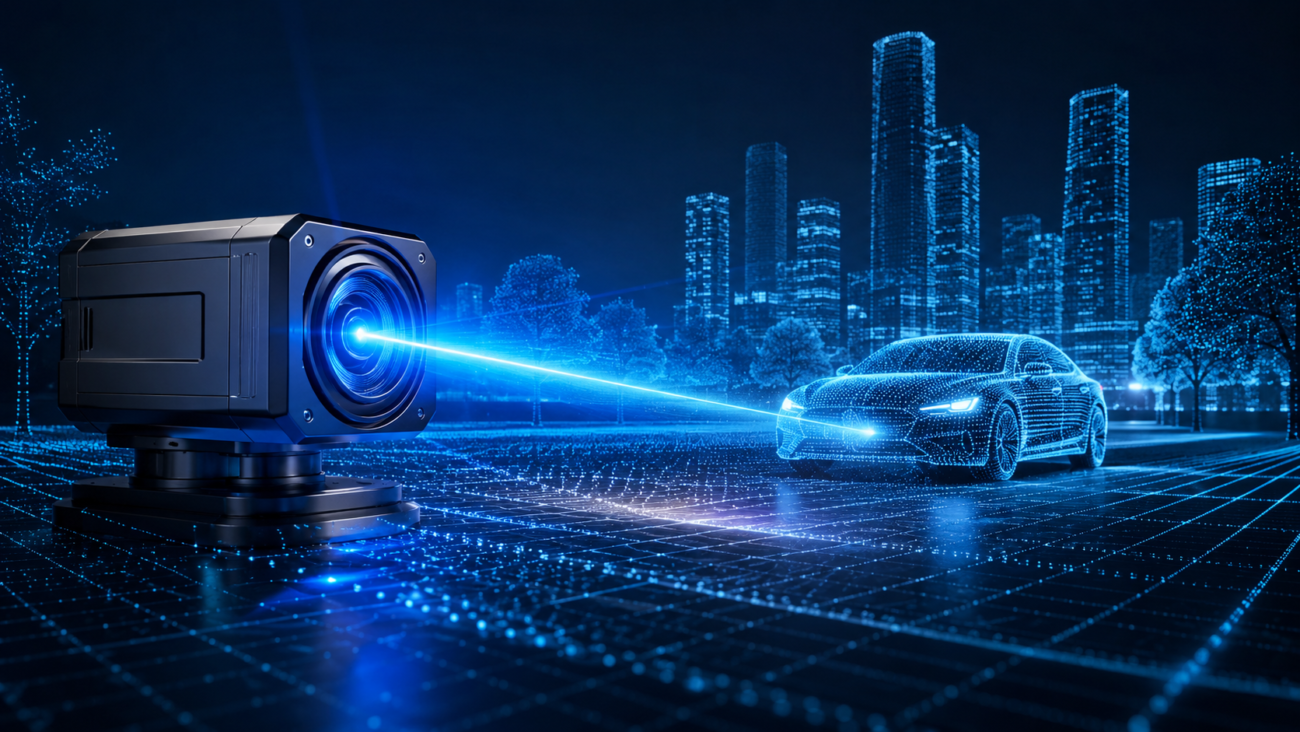
Laser ranging technology has become one of the most important sensing technologies in the modern world. From autonomous vehicles and industrial robots to smartphones and space exploration, laser distance measurement is now widely used across many industries.
In simple terms, laser ranging refers to the use of laser beams to measure the distance between objects. Because lasers travel in highly focused and stable beams, they can provide fast and accurate measurements even over long distances.
Today, laser ranging technology is evolving rapidly. It is becoming more accurate, smaller, smarter, and more affordable. More importantly, it is gradually transforming from a professional industrial tool into a core technology used in everyday life.
This article explores the future development trends of laser ranging technology and explains how it may influence industries and daily life in the coming years.
Why Laser Ranging Technology Matters
Distance measurement has always been essential for human civilization. In the past, people relied on visual estimation, mechanical tools, and radar systems. However, laser-based measurement offers several major advantages compared with traditional methods.
Key benefits of laser ranging include:
High measurement accuracy
Fast response speed
Long-distance detection capability
Strong resistance to interference
Easy integration with digital systems and AI
Because of these advantages, laser ranging is now used in many fields, including:
Autonomous driving
Robotics
Smart manufacturing
Aerospace engineering
Construction and surveying
Consumer electronics
Drone navigation
Security and defense systems
As modern machines increasingly need to understand their surroundings, laser ranging technology is becoming more important than ever.
Trend 1: Higher Accuracy and Precision
One of the biggest trends in laser ranging technology is the pursuit of higher precision.
Early laser measurement systems were mainly designed for rough distance estimation. Today, advanced systems can achieve millimeter-level or even microscopic accuracy.
In semiconductor manufacturing, for example, tiny positioning errors can damage an entire chip. High-precision laser measurement systems are therefore critical for modern electronics production.
In scientific research, laser ranging is also used to measure the distance between Earth and the Moon with extremely high accuracy. These measurements help scientists study gravity, planetary motion, and changes in Earth’s surface.
Future improvements in precision will likely come from:
More stable laser sources
Advanced optical components
Better signal processing algorithms
Improved environmental compensation technology
More sensitive detectors
As these technologies continue to improve, laser ranging systems will enter an era of ultra-precision measurement.
Trend 2: Smaller and More Compact Devices
Laser ranging equipment used to be large, heavy, and expensive. However, miniaturization is now one of the fastest-growing trends in the industry.
Today, many smartphones already contain compact laser sensing modules used for autofocus, facial recognition, and 3D scanning.
In the future, laser ranging devices are expected to become even smaller due to advances in chip integration and micro-optical technology.
Miniaturization offers several important advantages:
Lower power consumption
Reduced production costs
Better portability
Easier integration into consumer products
Improved reliability
As a result, laser ranging technology is expected to appear in a growing number of products, such as:
Smart glasses
AR and VR devices
Service robots
Medical instruments
Smart home systems
Wearable electronics
Just as cameras became standard components in electronic devices, laser sensors may soon become common in many everyday products.
Trend 3: Lower Costs and Mass Adoption
In the past, laser ranging systems were considered expensive high-end equipment. Today, the situation is changing rapidly.
As production scales increase and manufacturing technology improves, the cost of laser ranging devices continues to decline.
For example, automotive LiDAR systems once cost tens of thousands of dollars. Now, many car manufacturers are integrating affordable LiDAR solutions into commercial vehicles.
Several factors are driving this cost reduction:
Mass production of optical chips
Standardized manufacturing processes
Improved semiconductor technology
Automated assembly systems
Expanding market demand
Lower costs will allow laser ranging technology to move from specialized industrial applications into mainstream consumer markets.
This transformation is similar to what happened with GPS technology. Originally developed for military use, GPS later became a standard feature in smartphones and vehicles worldwide.
Laser ranging technology may follow a similar path in the coming decade.
Trend 4: Deep Integration with Artificial Intelligence
Modern laser ranging systems are no longer limited to measuring distance alone. Increasingly, they are being combined with artificial intelligence to help machines understand the surrounding environment.
Traditional systems simply output numerical distance data. Future intelligent systems will be able to:
Recognize objects
Predict movement
Analyze traffic conditions
Build real-time 3D maps
Plan safe navigation routes
Detect potential hazards
This development is especially important for autonomous driving.
Self-driving vehicles must not only detect nearby objects, but also determine whether those objects are pedestrians, bicycles, vehicles, or road signs.
As AI technology continues to evolve, laser ranging systems will gradually gain advanced environmental perception capabilities similar to human vision.
Trend 5: Advanced 3D Environmental Perception
Traditional distance measurement provides only single-point data. Modern laser systems, however, are increasingly capable of reconstructing entire three-dimensional environments.
This technology is commonly associated with point cloud mapping and 3D spatial modeling.
Applications include:
Autonomous vehicle navigation
Drone terrain mapping
Smart city infrastructure
Industrial automation
Digital twin technology
Architectural surveying
Future systems are expected to provide:
Real-time 3D reconstruction
Dynamic object tracking
Large-scale spatial mapping
High-speed environmental scanning
Indoor and outdoor integrated perception
As 3D sensing technology advances, machines will gain a far more detailed understanding of the physical world.
Trend 6: The Rapid Growth of LiDAR Technology
LiDAR, which stands for Light Detection and Ranging, is one of the most important branches of laser ranging technology.
LiDAR systems use laser beams to scan surrounding environments and create detailed 3D maps.
In recent years, LiDAR has experienced rapid growth, especially in the automotive industry.
Future LiDAR systems are expected to offer:
Higher Resolution
Improved resolution allows systems to detect smaller and more distant objects.
Longer Detection Range
Extended range improves safety for high-speed autonomous vehicles.
Lower Energy Consumption
Reduced power requirements make LiDAR suitable for mobile and battery-powered devices.
Better Environmental Adaptability
Future systems will perform better in rain, fog, snow, and low-light conditions.
Solid-State Design
Traditional mechanical LiDAR systems contain moving parts. Solid-state LiDAR removes these mechanical components, resulting in:
Smaller size
Higher reliability
Lower manufacturing cost
Longer operational lifespan
Many experts believe solid-state LiDAR could eventually become as common as digital cameras.
Trend 7: Expansion into Space and Deep-Sea Exploration
Laser ranging technology is also expanding into extreme environments beyond everyday terrestrial applications.
Space Exploration
Laser ranging is already used in:
Lunar missions
Satellite formation flying
Spacecraft docking systems
Deep-space navigation
Future missions to Mars and other planets may rely heavily on advanced laser navigation systems.
Underwater Applications
Although water presents challenges for laser propagation, new technologies are making underwater laser sensing increasingly practical.
Potential applications include:
Ocean floor mapping
Underwater robotics
Marine resource exploration
Pipeline inspection
Deep-sea research
As optical technology improves, laser systems may become important tools for future ocean exploration.
Trend 8: From Seeing Objects to Understanding the World
Perhaps the most important future trend is the shift from simple detection to intelligent spatial understanding.
Laser ranging systems are evolving into advanced perception systems capable of helping machines interpret the physical world.
Future intelligent robots may be able to:
Understand room layouts
Identify object functions
Analyze human movement
Predict environmental changes
Avoid dangerous situations automatically
This capability will accelerate the development of:
Smart cities
Intelligent factories
Home service robots
Autonomous transportation
AI-powered healthcare systems
In the future, laser ranging may become one of the core sensory technologies behind machine intelligence.
How Close Is This Technology to Everyday Life?
In reality, laser ranging technology is already part of daily life for many people.
Examples include:
Smartphone facial recognition
Robot vacuum obstacle avoidance
Vehicle driver assistance systems
Warehouse automation robots
Consumer drones
Over the next decade, laser ranging technology may become as widespread as cameras, Wi-Fi, and GPS.
Most people may not notice it directly, but it will quietly help machines perceive and understand the world around them.
Conclusion
The development of laser ranging technology represents a major step forward in machine perception and intelligent sensing.
What began as a simple distance measurement tool is now evolving into a powerful technology for environmental understanding, autonomous navigation, and spatial intelligence.
Future laser ranging systems will become:
More accurate
More compact
More affordable
More intelligent
More energy efficient
More widely adopted
As artificial intelligence, robotics, autonomous driving, and smart infrastructure continue to grow, laser ranging technology will play an increasingly important role in modern society.
In the near future, many intelligent devices around us may rely on their own “laser vision” to safely navigate and interact with the world.