

Applications of Infrared Thermal Imaging Technology in Precision Guidance Systems
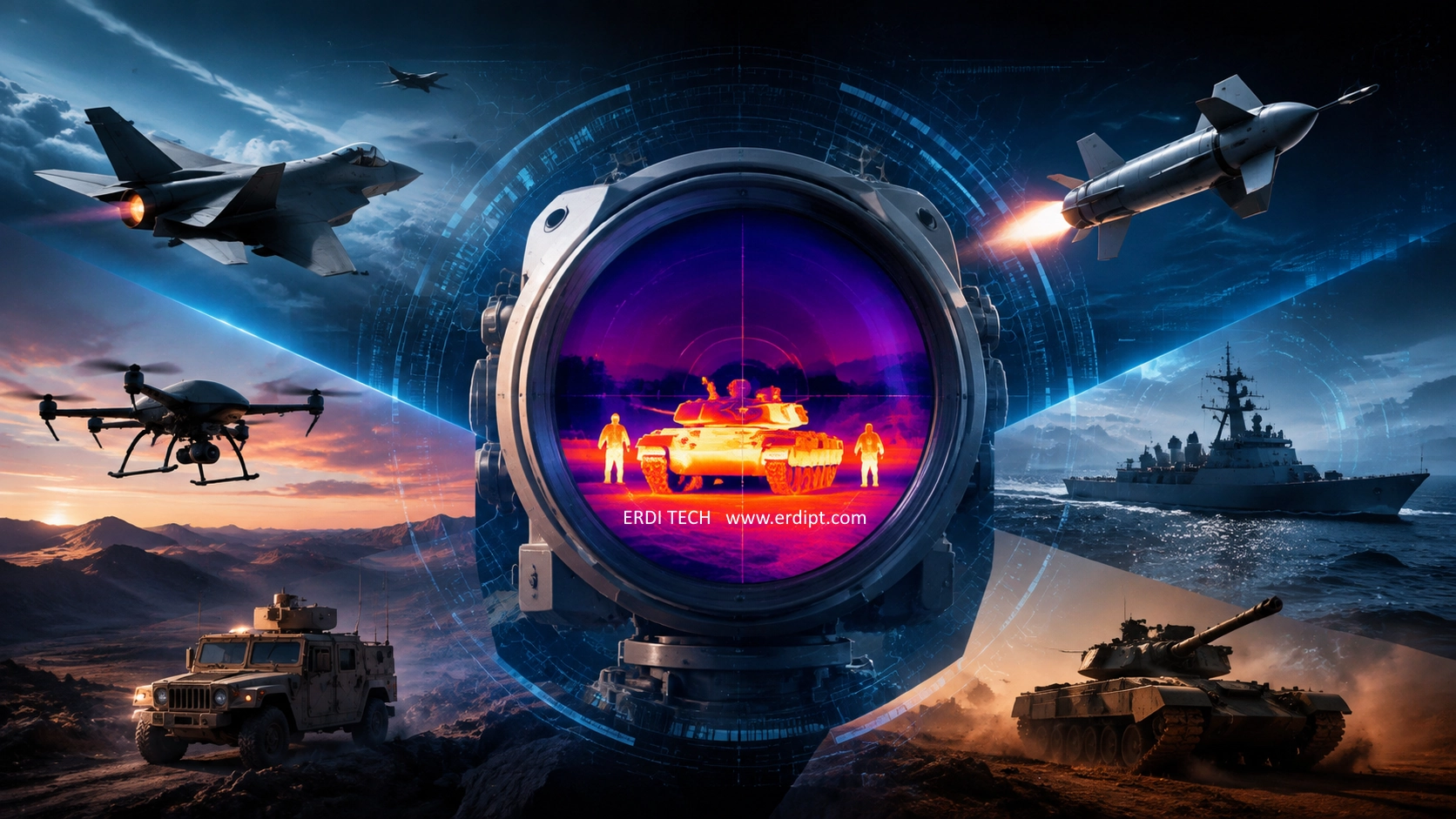
Introduction: From “Seeing the Target” to “Hitting the Target Precisely”
In modern warfare and advanced equipment systems, precision guidance technology has become a key technology for improving the effectiveness of weapon systems. Compared with traditional weapons that rely on manual aiming or simple navigation methods, precision-guided systems can obtain real-time target information through advanced sensors and automatically adjust their flight paths, achieving highly accurate strikes against targets.
Among various guidance technologies, infrared thermal imaging guidance has become one of the most important technical approaches in the field of precision guidance due to its passive detection capability, all-weather operating characteristics, and ability to identify targets based on their thermal signatures.
From early infrared homing systems to today’s advanced infrared imaging systems integrated with artificial intelligence, high-resolution detectors, and multi-sensor fusion technologies, infrared technology continues to drive precision-guided equipment toward higher intelligence, greater accuracy, and stronger adaptability.
So, how does infrared thermal imaging help weapon systems detect and track targets? What makes it different from conventional cameras? Why can it operate effectively in complex environments? This article will introduce the basic principles, system components, advantages, and applications of infrared thermal imaging technology in precision guidance systems.
1. What Is Infrared Thermal Imaging Technology?
1.1 Infrared Radiation: Information Hidden Beyond Visible Light
The visible world we see every day depends mainly on visible light imaging. Conventional cameras capture light reflected from objects and convert it into images that can be recognized by human eyes.
However, every object with a temperature above absolute zero (-273.15°C) continuously emits infrared radiation. Generally, the higher the temperature of an object, the stronger its infrared radiation becomes.
Humans, vehicles, engines, buildings, and even recently launched equipment all generate unique thermal radiation characteristics. Infrared thermal imaging systems detect this invisible infrared energy and convert it into visible images, allowing people and machines to “see” temperature differences.
It is important to understand that infrared thermal imaging is not simply another form of night vision. Traditional night vision systems enhance weak visible light, while thermal imaging directly detects heat radiation emitted by objects themselves. Therefore, even in complete darkness, infrared systems can detect targets with temperature differences from their surroundings.
2. Basic Components of an Infrared Thermal Imaging System
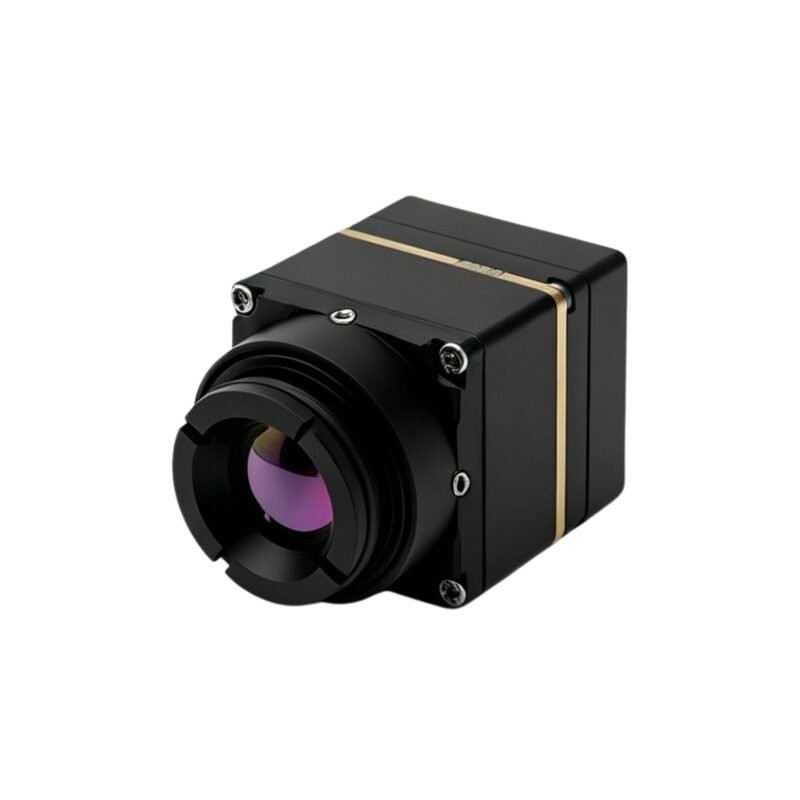
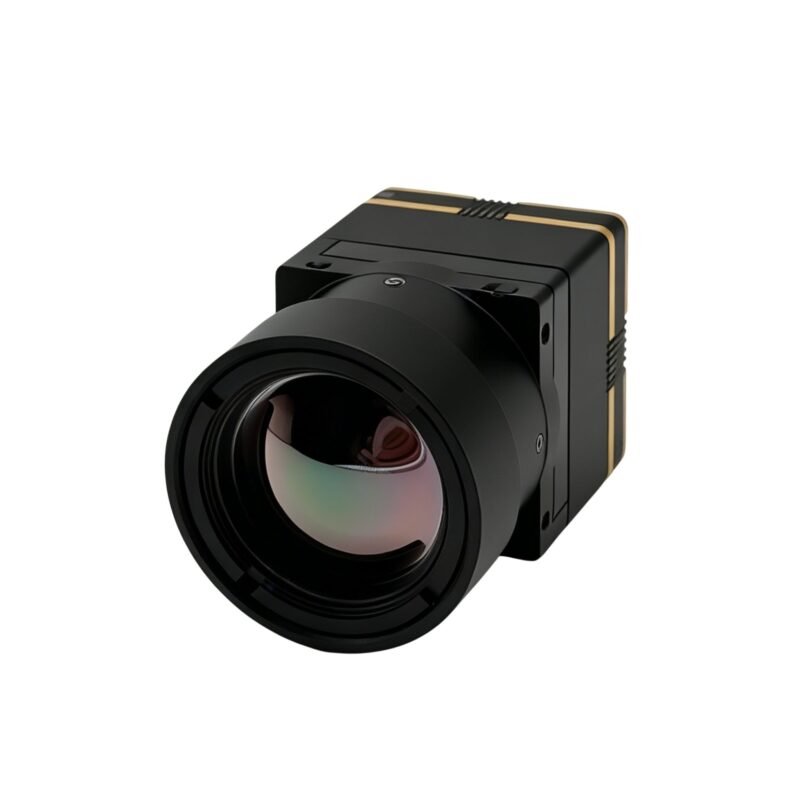
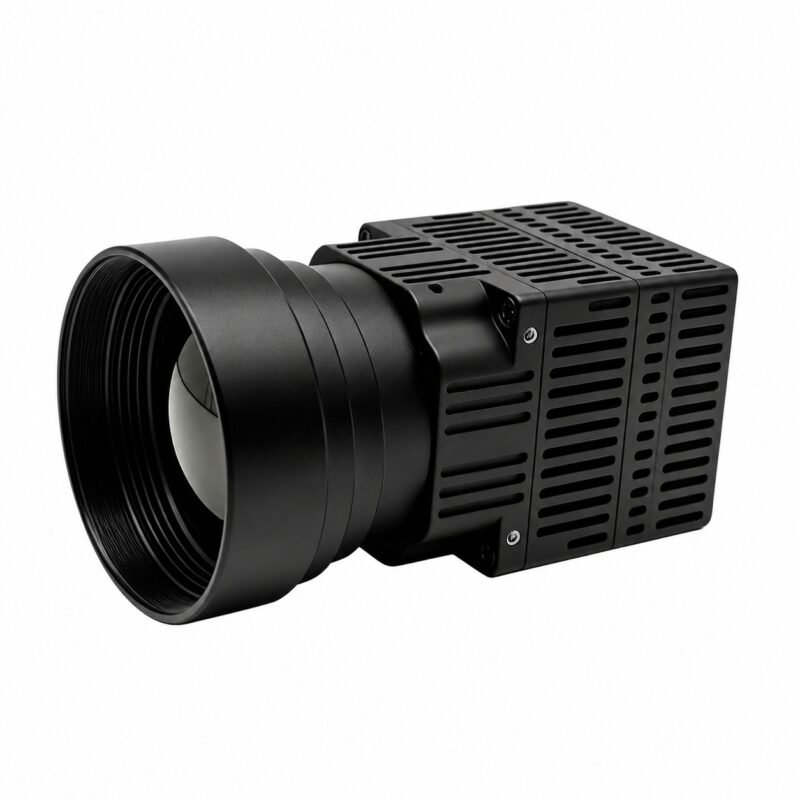
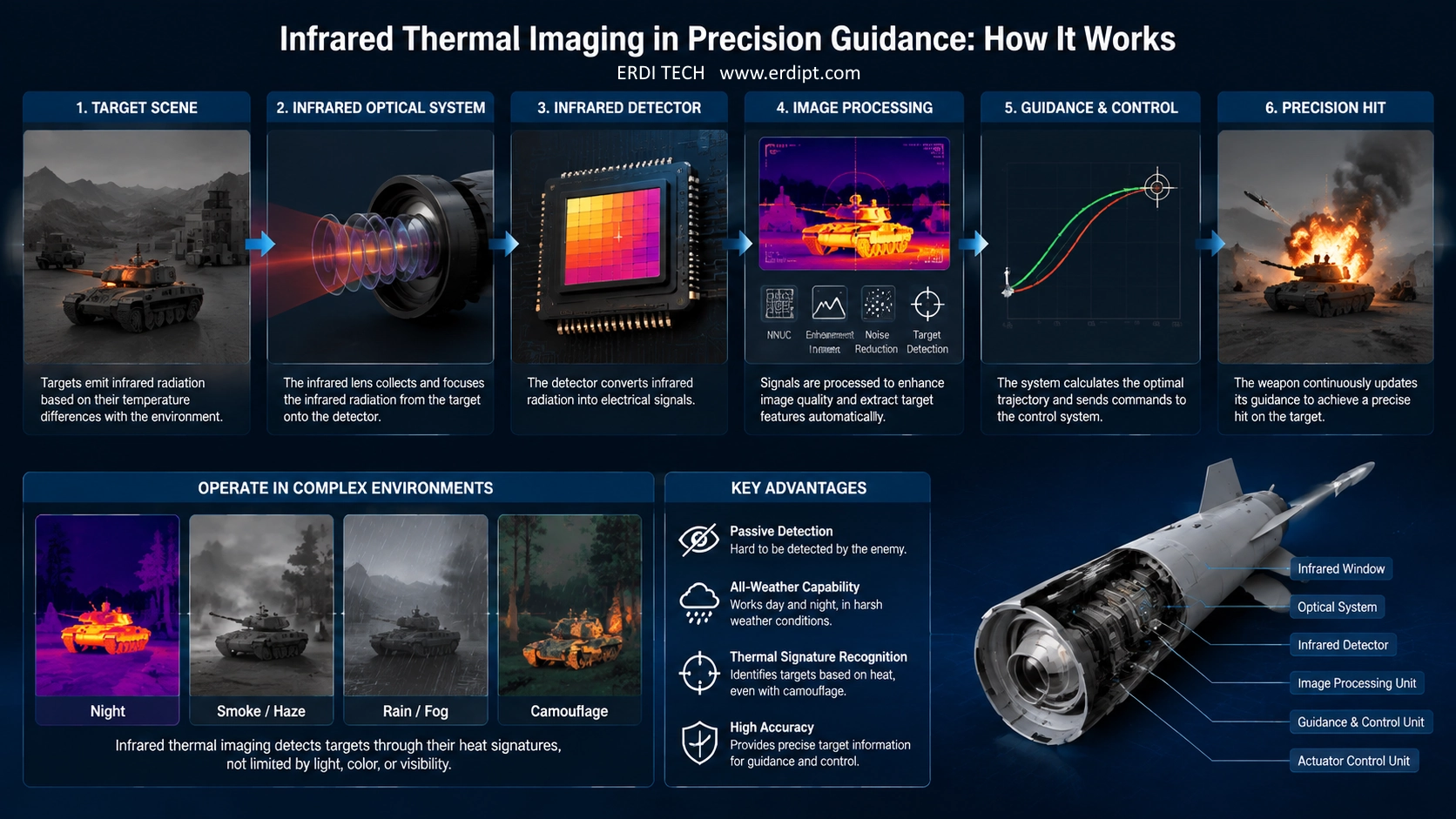
A precision-guidance infrared imaging system usually consists of several key components, including infrared detectors, optical systems, signal processing units, and guidance control systems.
2.1 Infrared Detector
The infrared detector is the core component of the entire system. It acts as the “eye” of an infrared imaging device.
Its main function is to receive infrared energy emitted by targets and convert it into electrical signals.
Currently, infrared detectors are mainly divided into two categories:
(1) Uncooled Infrared Detectors
Uncooled detectors usually use microbolometer technology and do not require complicated cooling systems.
Their advantages include:
- Small size
- Low power consumption
- High reliability
- Lower cost
They are widely used in:
- Small UAV thermal imaging systems
- Portable observation equipment
- Industrial inspection systems
- Some compact guidance applications
(2) Cooled Infrared Detectors
Cooled infrared detectors improve sensitivity by reducing the operating temperature of the detector elements.
Compared with uncooled detectors, cooled detectors provide:
- Longer detection range
- Higher image quality
- Better target recognition capability
- Improved performance against high-speed moving targets
Therefore, cooled infrared detectors are especially suitable for long-range and high-precision guidance systems.
2.2 Infrared Optical System
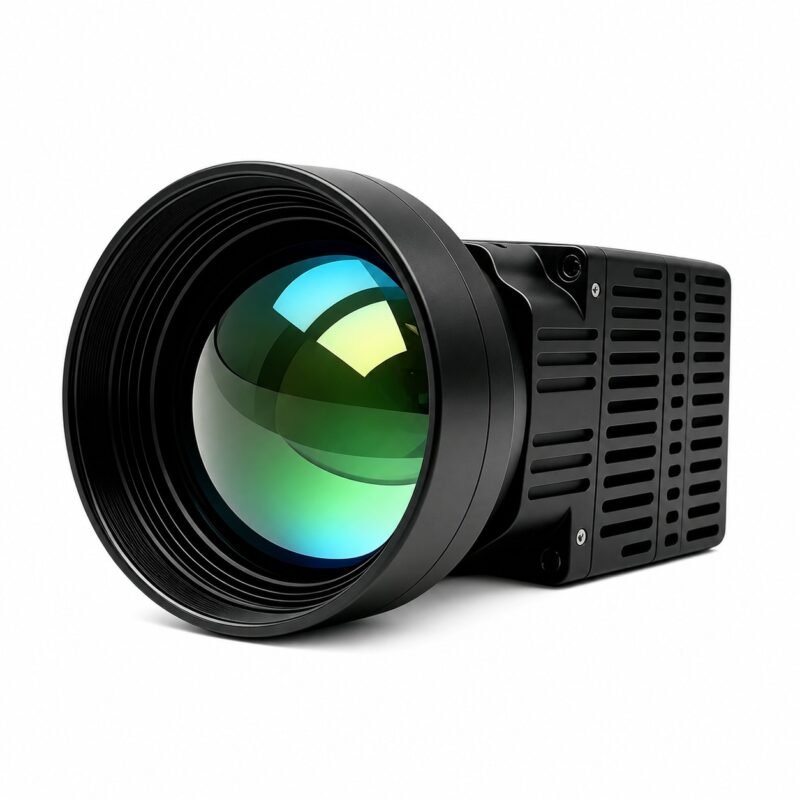
The infrared optical system collects infrared radiation from targets and focuses it onto the detector surface.
Because infrared wavelengths are different from visible light wavelengths, ordinary glass cannot efficiently transmit many infrared bands. Therefore, infrared lenses are usually manufactured from special materials such as:
- Germanium
- Silicon
- Chalcogenide glass
These materials provide excellent infrared transmission performance, but they are expensive, which is one of the reasons why infrared imaging systems cost more than conventional optical systems.
2.3 Image Processing System
The raw signals generated by infrared detectors require advanced processing, including:
- Non-uniformity correction
- Image enhancement
- Noise reduction
- Target detection
- Feature extraction
Modern precision guidance systems often integrate artificial intelligence algorithms to automatically identify targets and improve resistance against interference.
2.4 Guidance and Control System
After acquiring target information, the infrared imaging system works together with the flight control system.
The system analyzes:
- Target location
- Movement direction
- Distance changes
- Speed information
It then calculates correction parameters and adjusts the flight trajectory to achieve accurate target engagement.
3. Why Is Infrared Thermal Imaging Suitable for Precision Guidance?
Infrared thermal imaging has become an important technology in precision guidance because of several unique advantages.
3.1 Passive Detection Capability
One of the biggest advantages of infrared thermal imaging is that it can operate passively.
Many active detection systems, such as radar, must transmit electromagnetic signals to detect targets.
Although active systems can provide detailed information, they may also reveal their own position.
Infrared thermal imaging:
- Does not actively emit signals
- Is difficult to detect through electronic reconnaissance
- Provides stronger concealment
This makes it highly valuable for applications requiring stealth and survivability.
3.2 All-Weather Operating Capability
Infrared thermal imaging can continue working in many challenging environments.
Night Conditions
Without sunlight, conventional optical systems may lose performance, while infrared systems can still detect targets through their own thermal radiation.
Smoke and Haze
Certain infrared wavelengths have stronger penetration capability than visible light and can reduce the impact of smoke and haze.
Harsh Weather
Heavy rain, fog, and extreme atmospheric conditions can reduce infrared performance, but thermal imaging often maintains advantages compared with visible cameras.
3.3 Recognition Through Thermal Characteristics
Modern battlefields involve increasingly sophisticated camouflage technologies.
Traditional optical systems mainly rely on:
- Shape
- Color
- Visual appearance
Infrared systems can detect:
- Engine heat
- Exhaust temperature
- Heat generated by moving vehicles
- Human body temperature
Therefore, even targets with visual camouflage may still reveal themselves through thermal signatures.
4. Main Applications of Infrared Thermal Imaging in Precision Guidance
4.1 Infrared Imaging Guidance for Air-to-Air Missiles
Infrared guidance was first widely applied in air-to-air missile systems.
Aircraft engines generate significant heat, especially in exhaust areas, creating strong infrared signatures.
Early infrared guidance systems mainly searched for heat sources such as engine exhaust.
With advances in infrared imaging technology, modern systems have evolved beyond simple heat-seeking methods and can now generate detailed target images.
Compared with traditional infrared seekers, imaging infrared guidance systems can:
- Recognize target shapes
- Distinguish real targets from decoys
- Identify critical target areas
- Improve hit probability in complex environments
4.2 Air-to-Ground Precision Strike Systems
In air-to-ground operations, weapons must accurately identify targets such as:
- Tanks
- Armored vehicles
- Buildings
- Radar installations
Infrared thermal imaging can detect targets by analyzing temperature differences between objects and their surroundings.
For example, a recently operated armored vehicle may have noticeable thermal signatures from:
- Engine compartments
- Tracks
- Heated metal structures
Even when hidden in complex terrain, such thermal characteristics may reveal its presence.
4.3 Anti-Tank Missile Systems
Anti-tank weapons are another important application area for infrared imaging.
Modern armored vehicles often use:
- Camouflage coatings
- False targets
- Smoke screens
These measures can reduce the effectiveness of traditional optical detection.
Infrared imaging improves target recognition by analyzing:
- Thermal distribution
- Vehicle structural characteristics
- Movement patterns
4.4 UAV Precision Strike and Reconnaissance Systems
The rapid development of unmanned aerial vehicles has accelerated the demand for compact infrared thermal imaging modules.
UAV platforms usually require:
- Lightweight design
- Low power consumption
- High reliability
Infrared thermal imaging modules enable UAVs to perform:
- Night reconnaissance
- Target searching
- Thermal localization
- Automatic tracking
Especially in complex environments, infrared sensors serve as an important supplement to UAV vision systems.
4.5 Maritime Target Detection
Marine environments present challenges for visible-light imaging due to:
- Darkness
- Sea fog
- Changing illumination
However, ships, engines, exhaust systems, and human activity areas produce noticeable thermal signatures.
Therefore, infrared thermal imaging can support:
- Vessel detection
- Maritime surveillance
- Search and rescue
- Nighttime target recognition
5. Technical Challenges of Infrared Thermal Imaging Guidance
Although infrared thermal imaging provides many advantages, several challenges remain.
5.1 Environmental Effects
Infrared radiation can be affected by:
- Atmospheric absorption
- Humidity
- Clouds
- Smoke
Therefore, improving detector sensitivity and developing advanced compensation algorithms remain important research directions.
5.2 Changes in Target Thermal Characteristics
Target temperatures are not constant.
For example:
A vehicle becomes hotter after operation and gradually cools after stopping.
Thermal characteristics change depending on:
- Time
- Environment
- Operating conditions
Therefore, intelligent recognition algorithms are required to accurately identify targets.
5.3 Infrared Countermeasures
As infrared guidance technology develops, infrared countermeasure technologies are also evolving, including:
- Infrared decoys
- Heat source simulation
- Infrared camouflage materials
Future infrared systems must develop stronger discrimination capabilities to distinguish real targets from interference sources.
6. Artificial Intelligence Driving the Development of Infrared Guidance Technology
In recent years, artificial intelligence has significantly influenced infrared imaging technology.
Traditional infrared systems mainly relied on human operators to interpret images, while AI algorithms can:
- Automatically detect targets
- Classify objects
- Track moving targets
- Analyze complex thermal patterns
Deep learning technologies are particularly effective in processing infrared images containing:
- Low-contrast targets
- Blurred objects
- Small targets
The combination of artificial intelligence and infrared imaging will further enhance the autonomous capabilities of precision guidance systems.
7. Future Development Trends of Infrared Thermal Imaging Technology
Future developments in infrared thermal imaging for precision guidance will mainly focus on the following areas:
7.1 Higher Resolution
Continuous improvements in detector technology, including smaller pixel sizes and higher resolution arrays, will enable systems to detect smaller targets at greater distances.
7.2 Miniaturization
With the growth of UAVs and intelligent equipment, infrared systems must become:
- Smaller
- Lighter
- More energy efficient
Compact infrared thermal imaging modules will become increasingly important.
7.3 Multi-Sensor Fusion
Future guidance systems will no longer rely on a single sensor.
Instead, they will combine:
- Visible cameras
- Infrared imaging
- Laser ranging
- Radar
to create more reliable and comprehensive perception systems.
7.4 Intelligent Target Recognition
Artificial intelligence will further improve autonomous decision-making capabilities, enabling systems to complete the process:
Detect target → Identify target → Track target → Provide guidance information
with greater speed and accuracy.
Conclusion
The development of infrared thermal imaging technology has transformed precision guidance systems from simply “detecting heat sources” into advanced systems capable of “understanding targets.”
With advantages such as passive detection, all-weather operation, and thermal signature recognition, infrared thermal imaging has become an essential component of modern precision-guided equipment.
From airborne platforms and UAV systems to armored vehicle detection and maritime surveillance, infrared technology continues to expand its role in intelligent sensing applications.
In the future, improvements in infrared detectors, optical systems, signal processing, and artificial intelligence will further enhance the capabilities of infrared thermal imaging systems.
For infrared module manufacturers, system integrators, and technology developers, understanding the development trends of infrared imaging technology will help capture new opportunities in the rapidly growing intelligent sensing market.
Featured Products