

How to Choose the Right Thermal Imaging Module for a Drone: A Complete Buyer's Guide (2026)
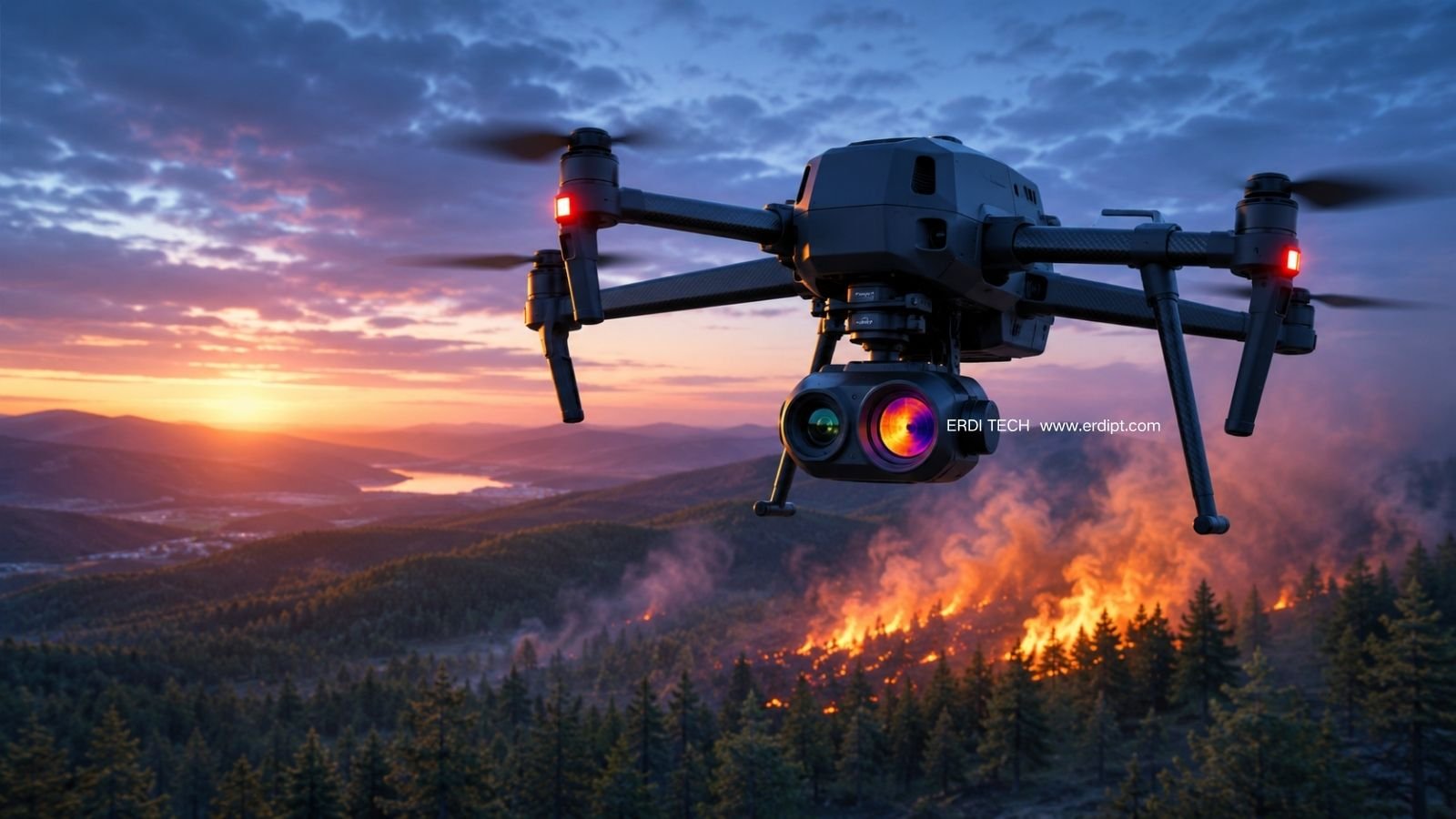
As drones continue to transform industries ranging from infrastructure inspection to public safety, thermal imaging has become one of the most valuable sensing technologies available. Whether the mission involves locating missing persons at night, detecting overheating electrical equipment, monitoring wildfires, or enhancing border security, a thermal imaging module allows a drone to “see” heat rather than visible light.
Yet selecting the right thermal camera for a UAV is not as simple as choosing the highest resolution or the lowest price. Every application has different requirements, and the best thermal imaging module is the one that delivers the right balance of performance, weight, power consumption, integration, and cost.
This comprehensive guide explains the key specifications that matter, answers the most common buyer questions, and provides practical recommendations to help drone manufacturers, system integrators, and professional users choose the right thermal imaging solution.
Quick Answer: How Do You Choose a Thermal Imaging Module for a Drone?
If you only remember one thing from this guide, remember this:
Choose your thermal imaging module based on your application, not simply on technical specifications.
A proper selection process should evaluate:
Mission requirements
Detection distance
Detector resolution
Thermal sensitivity (NETD)
Lens focal length
Temperature measurement capability
Size and weight
Interface compatibility
Image processing performance
Environmental reliability
Instead of asking “Which thermal camera is the best?”, ask:
“Which thermal camera is best for my drone mission?”
That single mindset often leads to a much better purchasing decision.
Why Are Thermal Cameras Becoming Standard Equipment on Professional Drones?
Unlike conventional cameras, thermal imaging systems detect infrared radiation naturally emitted by objects.
Because every object above absolute zero emits heat energy, thermal cameras can produce images without relying on visible light.
This provides significant operational advantages:
Night vision without external illumination
Detection through smoke, haze, and light fog
Identification of heat sources
Easier detection of humans and animals
Improved situational awareness in challenging environments
These capabilities explain why thermal imaging has become increasingly common across industries such as:
Utility inspection
Oil & gas
Firefighting
Search and rescue
Law enforcement
Border security
Agriculture
Industrial maintenance
Maritime surveillance
Defense
Step 1: Start with Your Mission Requirements
Every successful thermal imaging project begins with understanding the mission.
Different applications require different hardware.
Power Line Inspection
Typical objectives include:
Detecting overheated connectors
Identifying failing transformers
Monitoring transmission lines
Priority:
High temperature measurement accuracy.
Search and Rescue
Primary objectives:
Locate missing persons
Search large areas rapidly
Operate day and night
Priority:
Excellent thermal sensitivity and wide-area scanning.
Wildfire Detection
Typical requirements:
Detect small hotspots
Observe large forests
Fly at high altitude
Priority:
Higher detector resolution combined with long focal length optics.
Industrial Inspection
Typical tasks:
Equipment diagnostics
Building inspection
Pipeline monitoring
Factory maintenance
Priority:
Reliable radiometric temperature measurement.
Security & Surveillance
Common applications:
Perimeter protection
Border patrol
Critical infrastructure
Maritime monitoring
Priority:
Long-range detection with stable image quality.
Understanding your mission immediately narrows down the most suitable thermal imaging module.
Detector Resolution: Higher Isn’t Always Better
Resolution is usually the first specification buyers compare.
Common detector resolutions include:
256 × 192
384 × 288
640 × 512
1280 × 1024
Higher resolution offers:
More image detail
Better target recognition
Longer identification distance
However, it also increases:
Purchase cost
Processing requirements
Data bandwidth
Storage demand
Power consumption
For many industrial inspections, a 384 × 288 detector provides excellent performance.
For long-range surveillance or wildfire monitoring, a 640 × 512 detector is often a better investment.
Rather than selecting the highest resolution available, choose one that matches your operational requirements.
Pixel Pitch: Why Smaller Pixels Matter
Pixel pitch refers to the distance between adjacent detector pixels.
Today’s mainstream thermal detectors generally use:
17 μm
15 μm
12 μm
Modern detector technology continues moving toward smaller pixels.
Smaller pixel pitches provide several important advantages:
More compact camera modules
Reduced system weight
Smaller optical assemblies
Lower manufacturing cost
Better suitability for lightweight UAV platforms
For most new drone projects, 12 μm detectors have become the preferred choice.
NETD: One of the Most Important Specifications
NETD (Noise Equivalent Temperature Difference) measures thermal sensitivity.
Lower values indicate better performance.
Typical specifications include:
<60 mK
<50 mK
<40 mK
<30 mK
A lower NETD allows the camera to detect extremely small temperature differences.
Benefits include:
Better target detection
Cleaner images
Higher contrast
Improved performance in low thermal contrast environments
This becomes especially important during:
Night surveillance
Human detection
Wildlife monitoring
Rescue operations
Many experienced UAV integrators consider NETD more important than simply increasing detector resolution.
Choosing the Right Lens for Your Drone
The detector receives most of the attention, but the lens largely determines actual system performance.
Common focal lengths include:
9 mm
13 mm
19 mm
25 mm
35 mm
50 mm
75 mm
Wide-angle lenses provide:
Larger field of view
Faster area scanning
Better situational awareness
Long focal length lenses provide:
Higher magnification
Greater detection distance
Better long-range identification
There is no universal “best” lens.
The correct focal length depends on:
Flight altitude
Target size
Mission distance
Required field of view
Do You Need Radiometric Temperature Measurement?
Many thermal cameras advertise temperature measurement capabilities.
However, not every drone application requires radiometric imaging.
Security patrols typically focus on detecting intruders rather than measuring their temperature.
Conversely, radiometric measurement is essential for:
Electrical inspections
Solar farm maintenance
Industrial diagnostics
Building energy audits
If your application requires thermal analysis, consider features such as:
Spot measurement
Area measurement
Temperature alarms
Multi-region analysis
Thermal reporting software
Choosing radiometric functionality only when necessary helps optimize project budgets.
Why Weight Matters More Than You Think
Drone endurance depends heavily on payload weight.
A heavier thermal camera results in:
Shorter flight time
Increased battery consumption
Higher gimbal load
Reduced maneuverability
Modern UAV thermal imaging modules therefore emphasize:
Miniaturization
Integrated thermal cores
Lightweight mechanical design
Even reducing payload weight by 50 grams can noticeably improve endurance for small multirotor platforms.
Integration Is Just as Important as Performance
An excellent thermal camera can still become a poor choice if integration is difficult.
Before selecting a module, verify support for common interfaces such as:
USB
MIPI
LVDS
GigE
UART
Also evaluate whether the manufacturer provides:
SDKs
APIs
Development documentation
Sample code
Engineering support
For drone manufacturers and system integrators, strong software support often reduces development time significantly.
Image Processing Makes a Big Difference
Modern thermal imaging quality depends on more than hardware specifications.
Advanced image processing algorithms significantly improve usability.
Important features include:
Automatic Gain Control (AGC)
Non-Uniformity Correction (NUC)
Noise reduction
Image sharpening
Digital zoom optimization
Multiple color palettes
Target enhancement
A camera with excellent software optimization often delivers a better user experience than one relying solely on higher hardware specifications.
Reliability Determines Long-Term Operating Costs
Professional drones frequently operate under demanding environmental conditions.
Typical operating environments include:
Desert heat
Mountain cold
Coastal humidity
Heavy vibration
Continuous operation
Therefore, reliability should never be overlooked.
Key evaluation factors include:
Operating temperature range
Shock resistance
Dust protection
Moisture resistance
Long-term stability
Expected service life
A highly reliable thermal imaging module generally reduces maintenance costs while improving mission success rates.
Frequently Asked Questions
Is higher resolution always better?
No. Higher resolution improves image detail but also increases cost, power consumption, and processing requirements. Select the resolution that fits your application.
What NETD value is considered good?
For most professional UAV applications, a NETD below 50 mK is considered very good, while premium systems may achieve below 30–40 mK.
Is a radiometric thermal camera necessary?
Only if your application requires accurate temperature measurement, such as electrical inspections or industrial diagnostics.
What is the best lens focal length?
There is no universal answer
Put numbers to that decision before you buy: our free thermal imaging module selection calculator returns the field of view, IFOV, pixels on target and the resulting detection, recognition and identification ranges.
. The ideal focal length depends on flight altitude, target size, required detection distance, and field of view.Which specification matters most?
There is no single specification that determines performance. Successful system design requires balancing detector resolution, NETD, optics, weight, software, and integration.
Future Trends in Drone Thermal Imaging
The next generation of UAV thermal imaging systems will continue evolving toward higher intelligence and greater integration.
Industry trends include:
Higher detector resolutions
Smaller pixel pitches
Lower power consumption
AI-powered target recognition
Automatic object tracking
Multi-sensor fusion
Edge computing
Lightweight integrated payloads
As manufacturing technology improves, thermal imaging is becoming increasingly accessible across commercial, industrial, and public safety markets.
Rather than being limited to specialized defense platforms, thermal imaging is rapidly becoming standard equipment for professional drones worldwide.
Final Thoughts
Selecting a drone thermal imaging module requires far more than comparing product datasheets.
The most successful UAV systems result from carefully matching thermal imaging performance to the actual operational mission.
By evaluating application requirements, detector specifications, optics, thermal sensitivity, weight, software capabilities, integration support, and environmental reliability together, organizations can choose a solution that delivers optimal performance while maximizing long-term return on investment.
Whether your project involves infrastructure inspection, wildfire monitoring, industrial diagnostics, security surveillance, or emergency response, choosing the right thermal imaging module is one of the most important decisions in building an effective drone imaging system.
When the hardware is matched to the mission—not just the specifications—the entire UAV system performs better, operates more efficiently, and creates greater value over its lifetime.
Featured Products